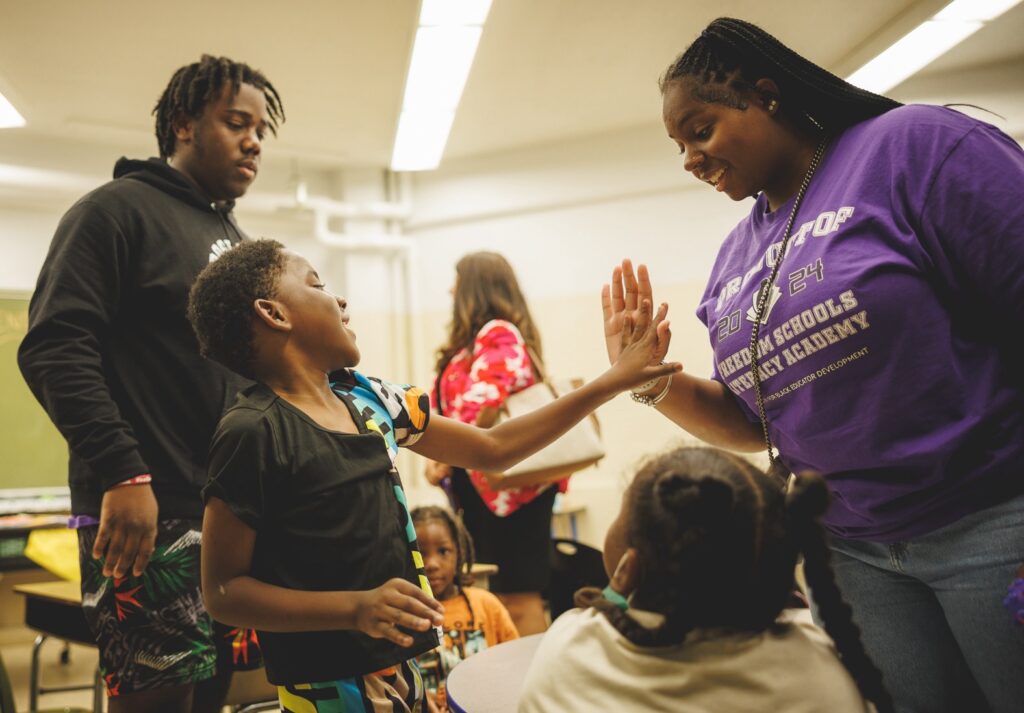
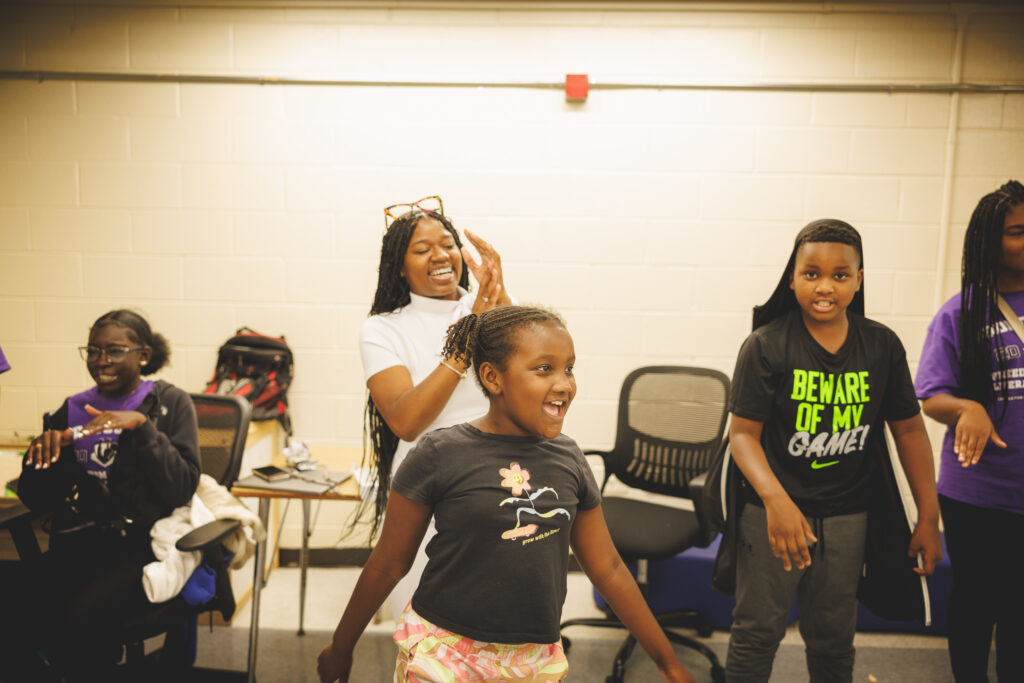
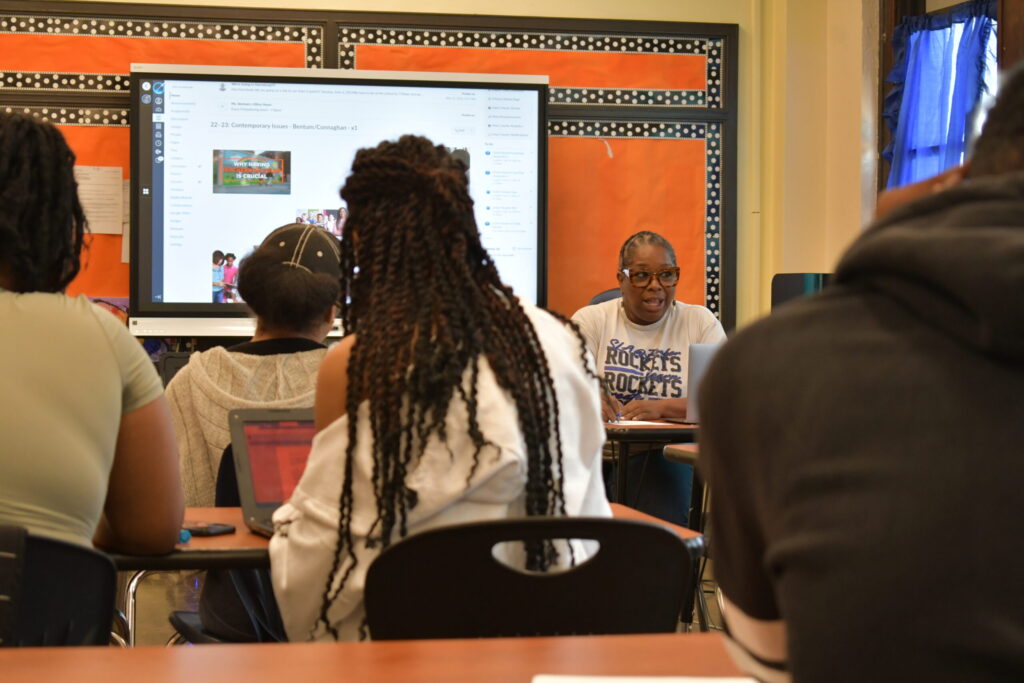
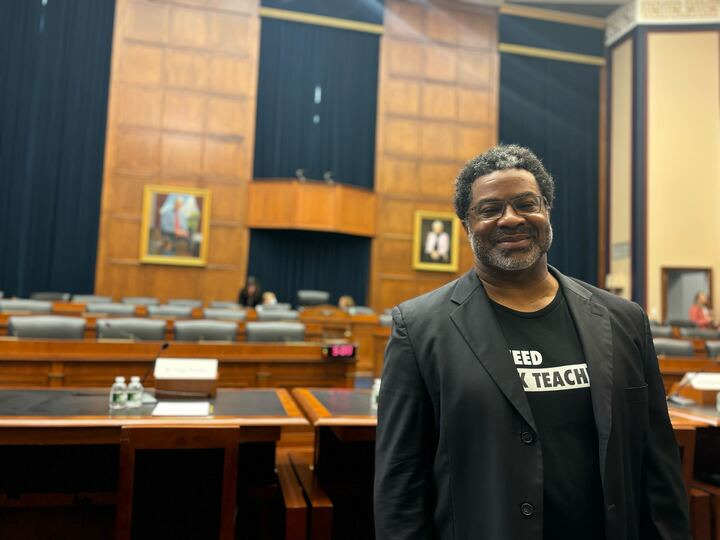
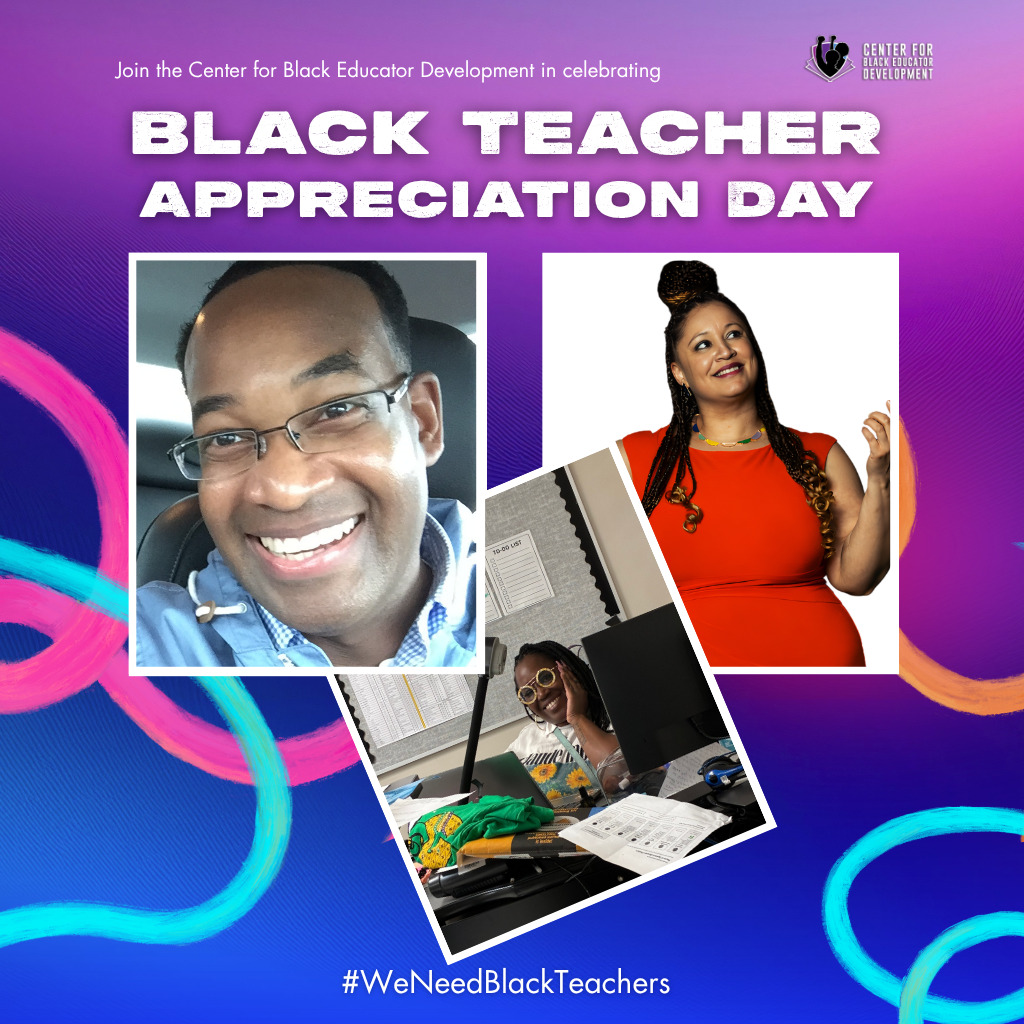
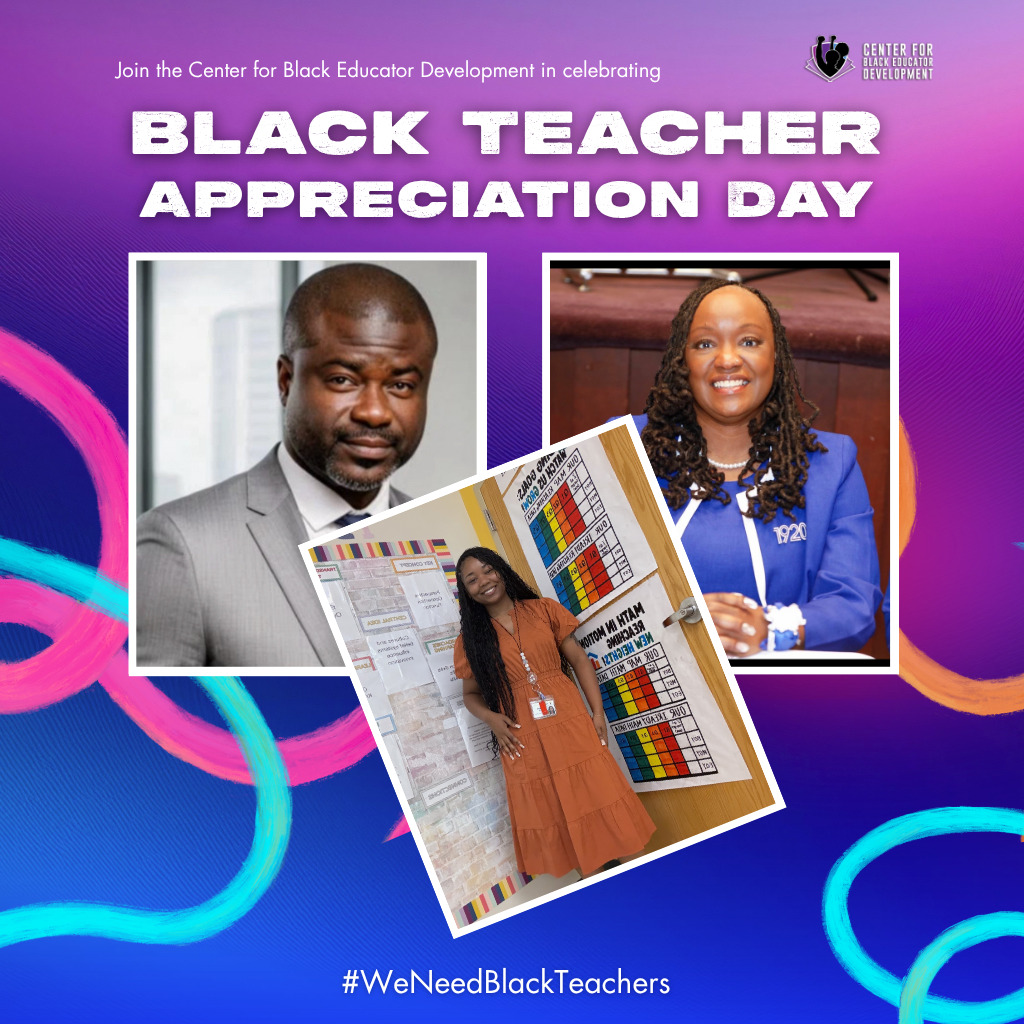
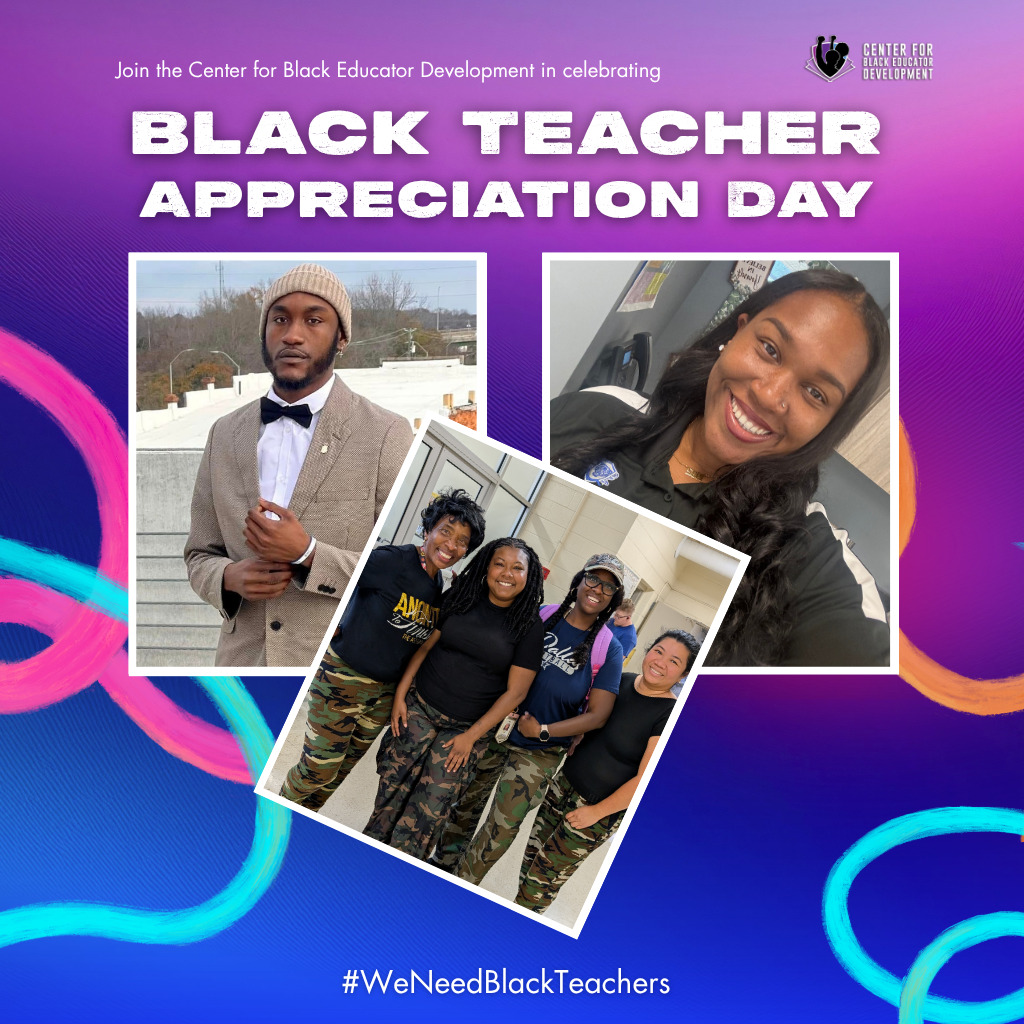
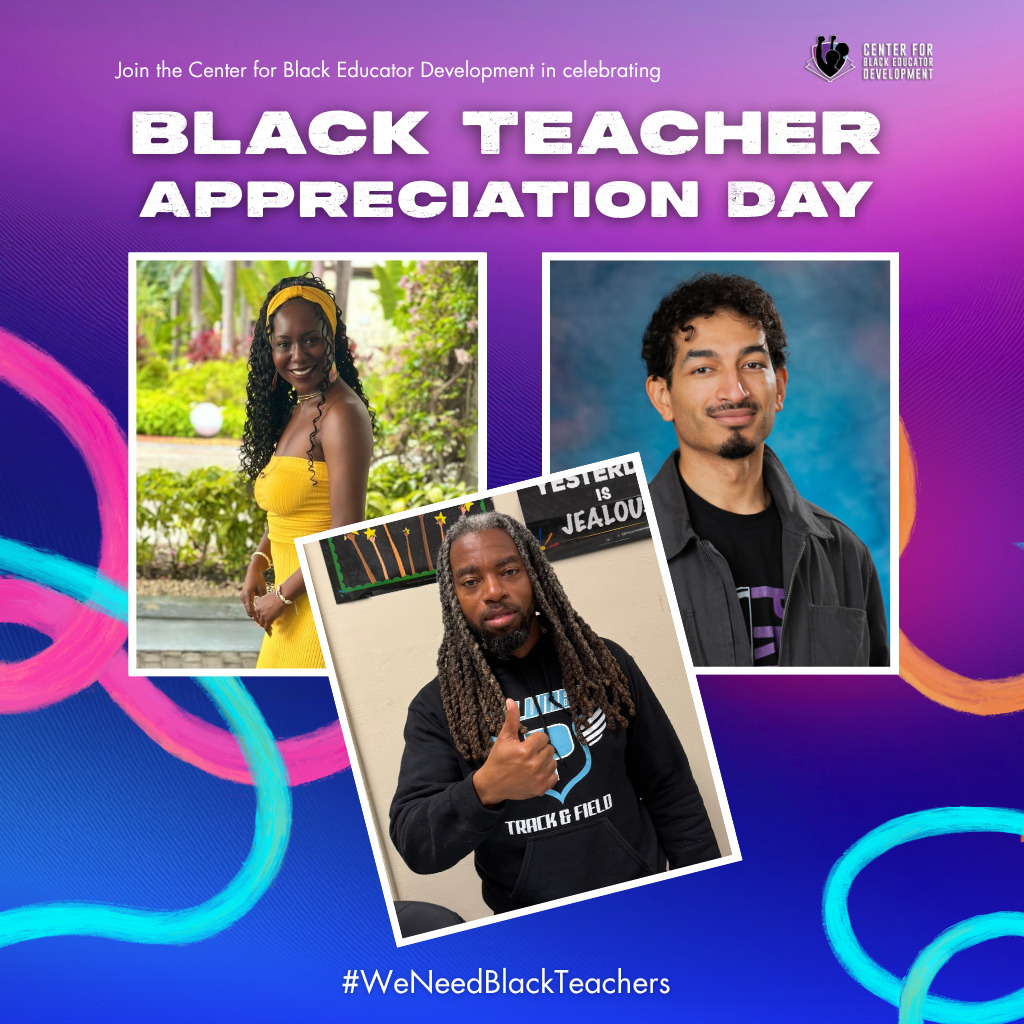
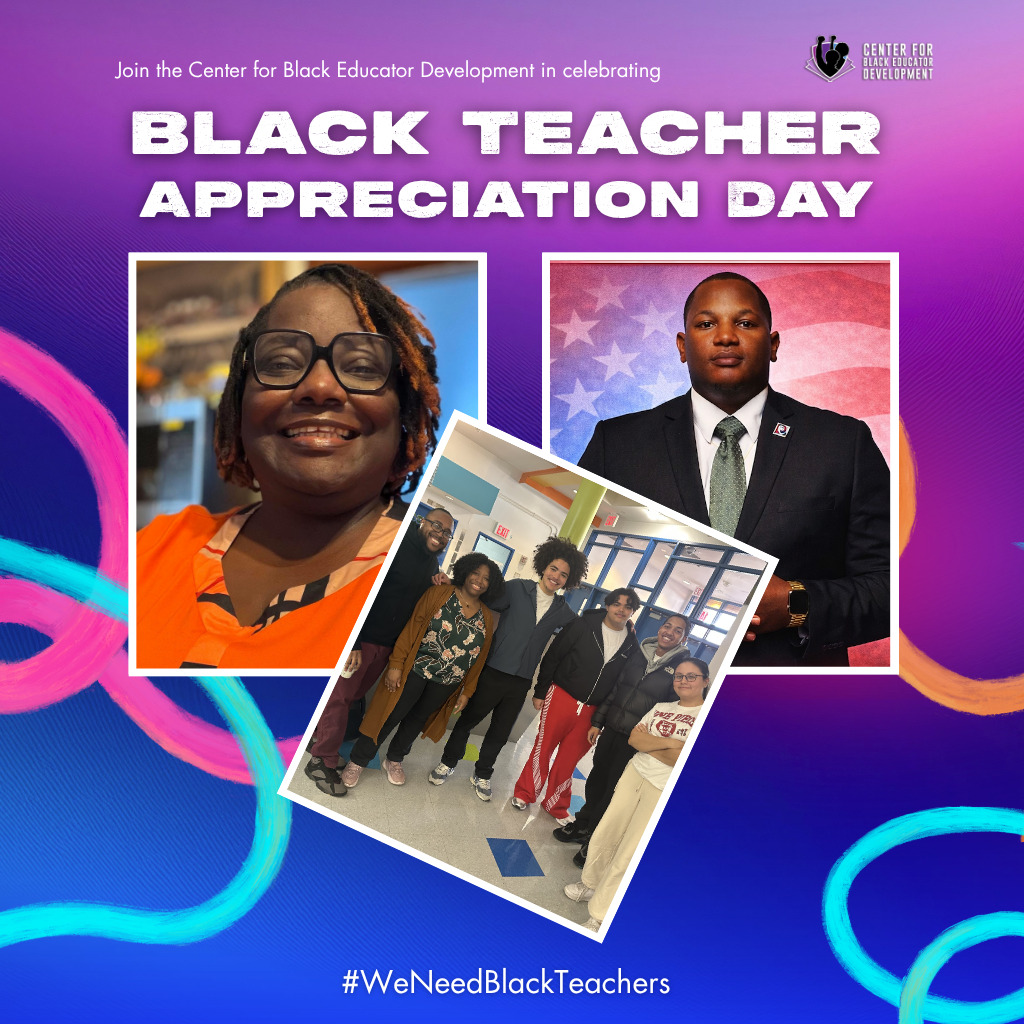
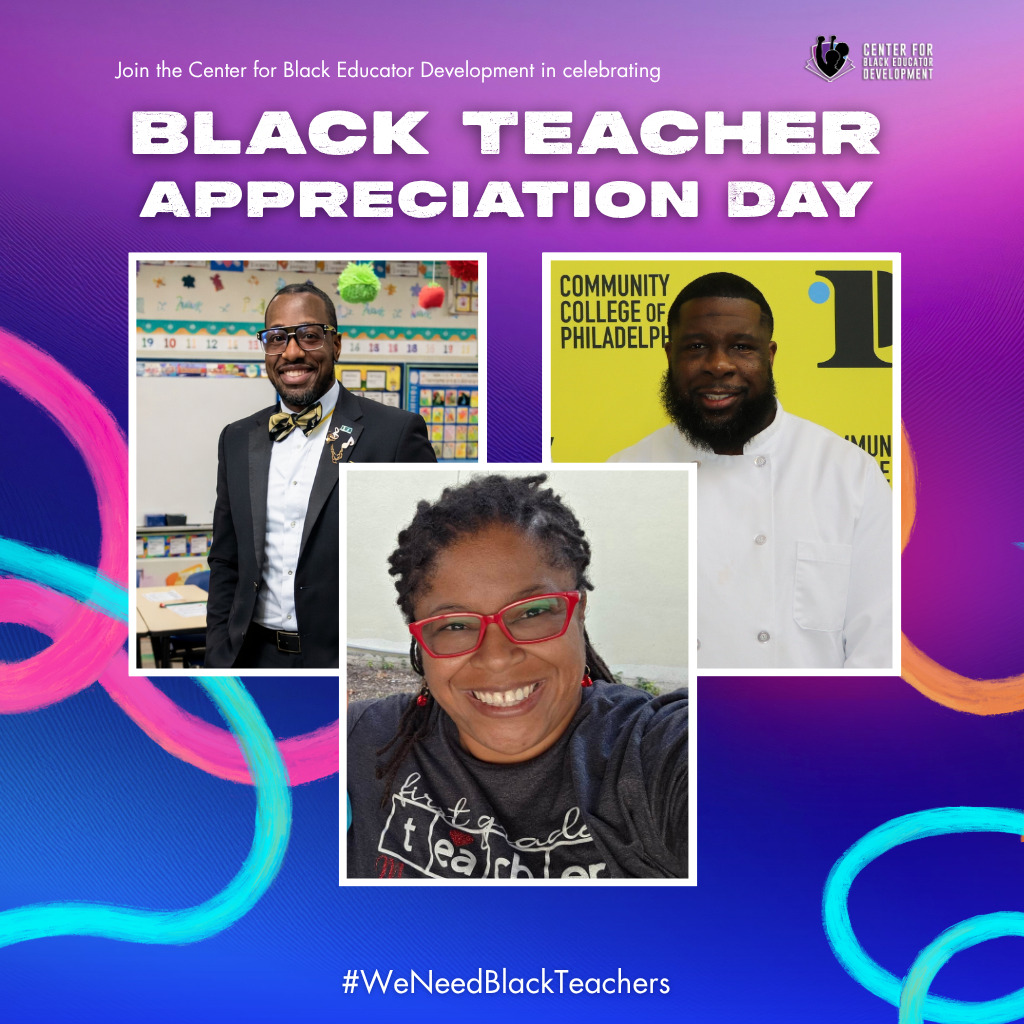
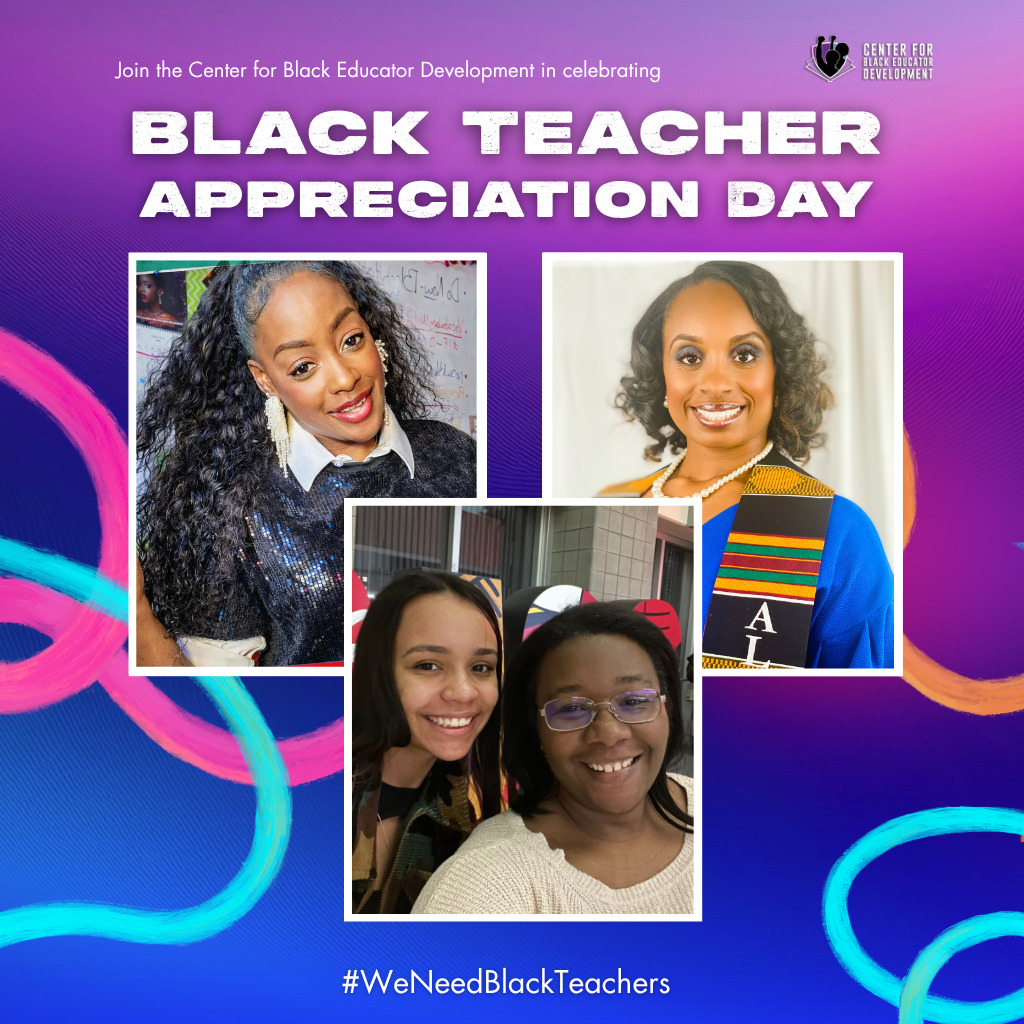
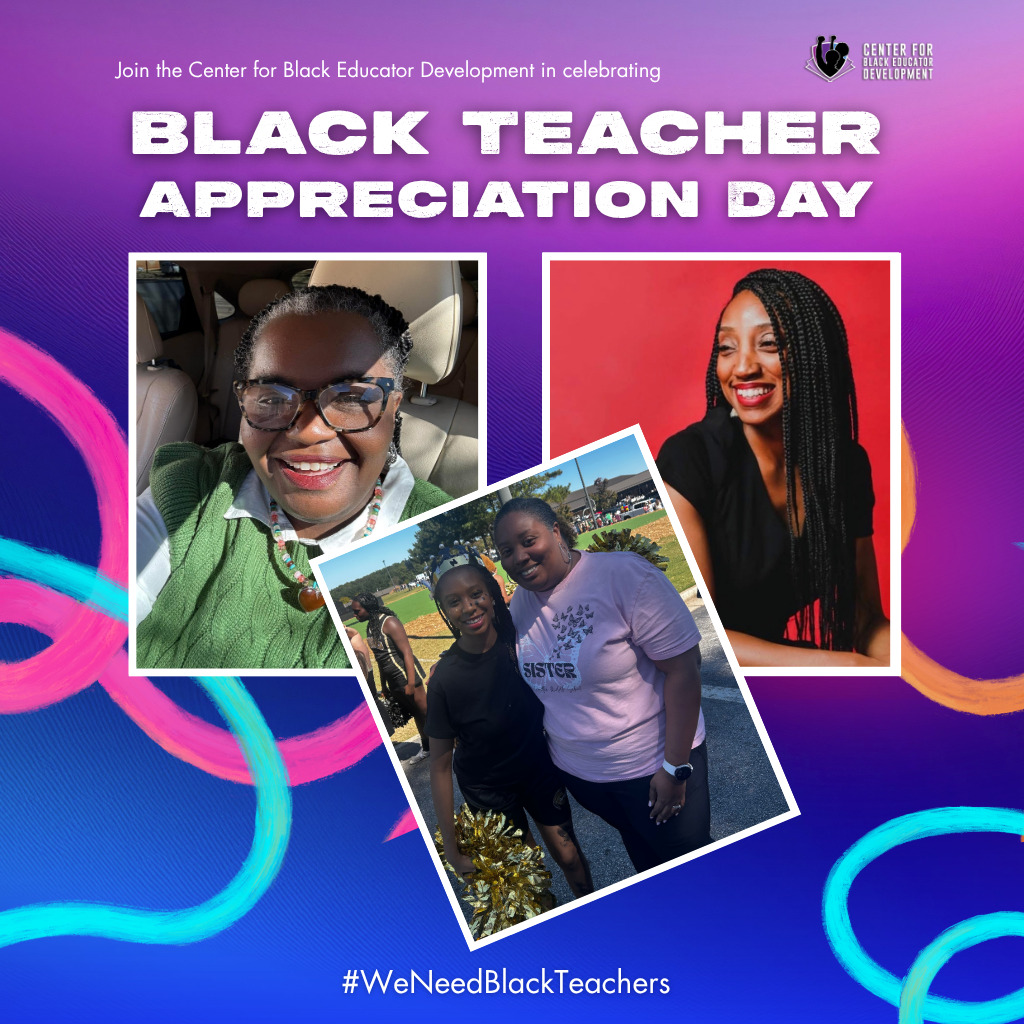
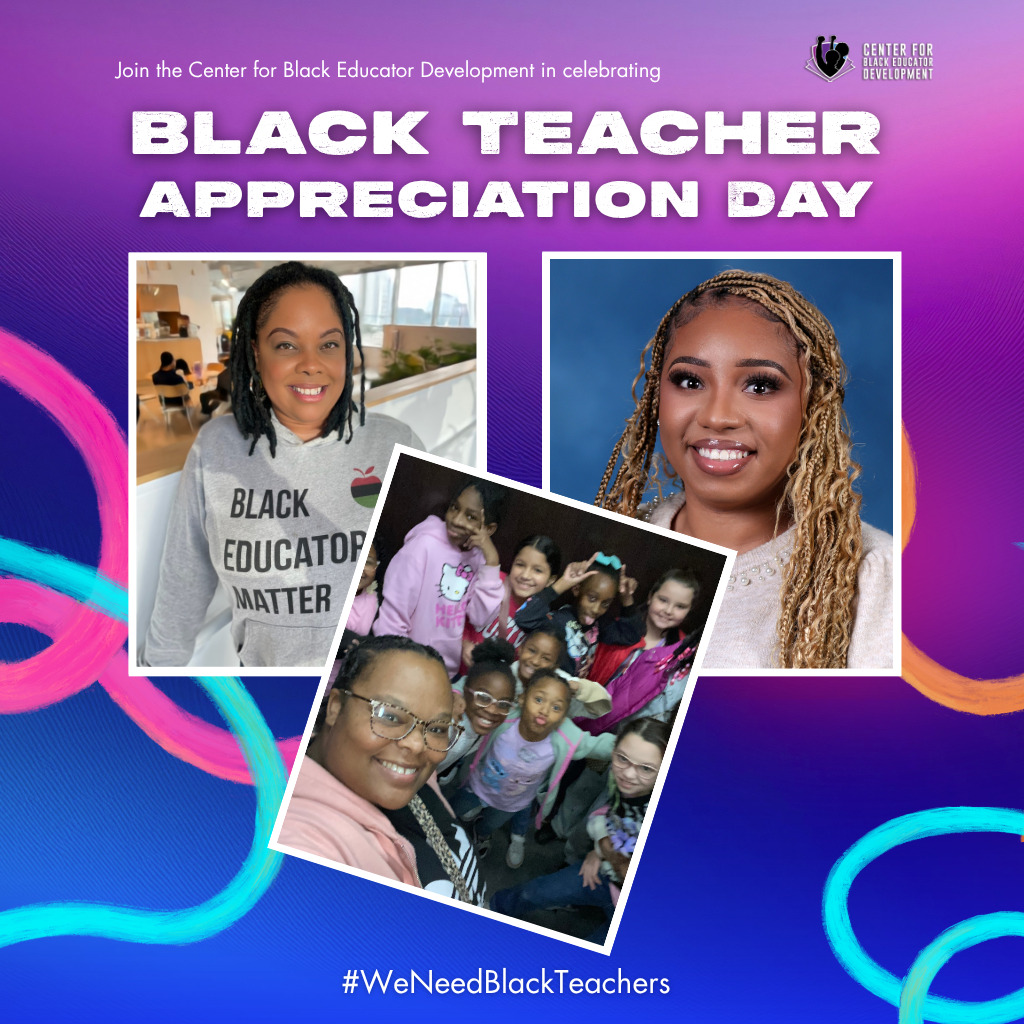
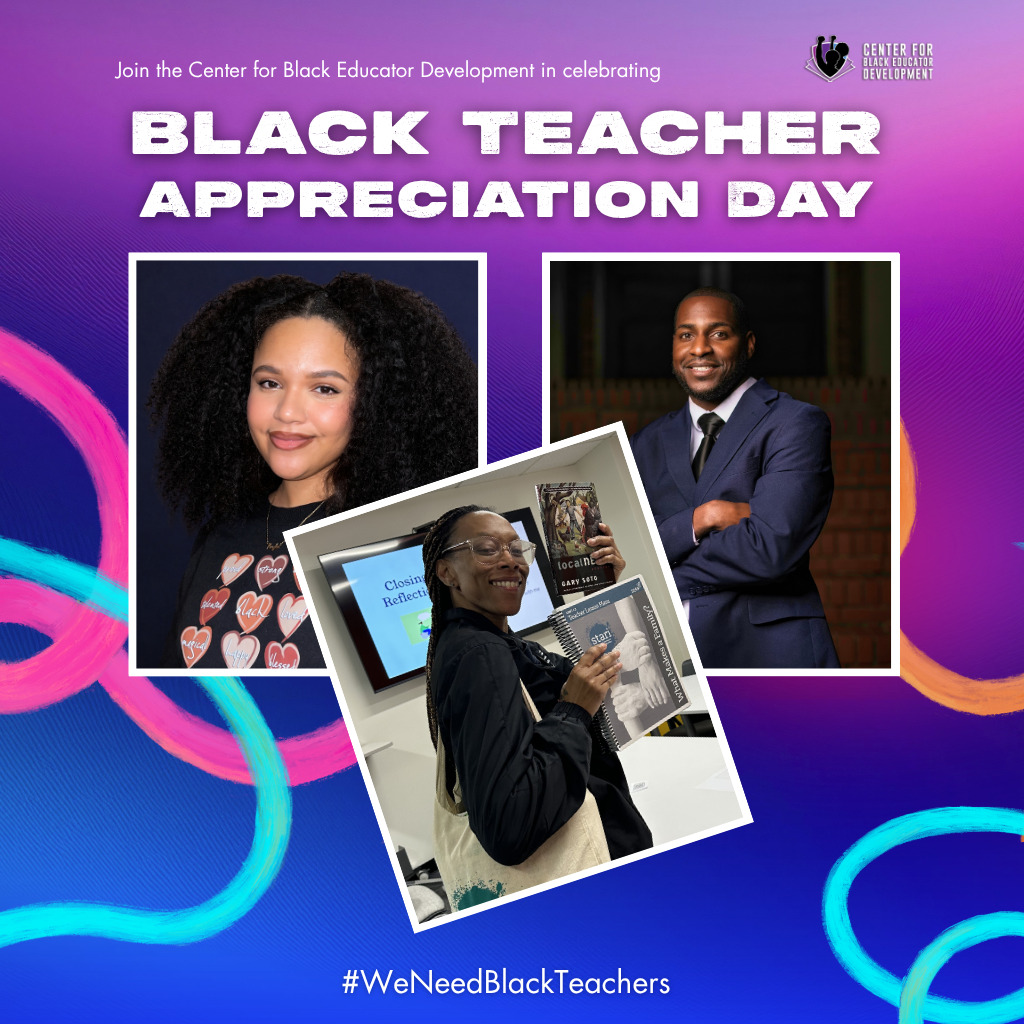
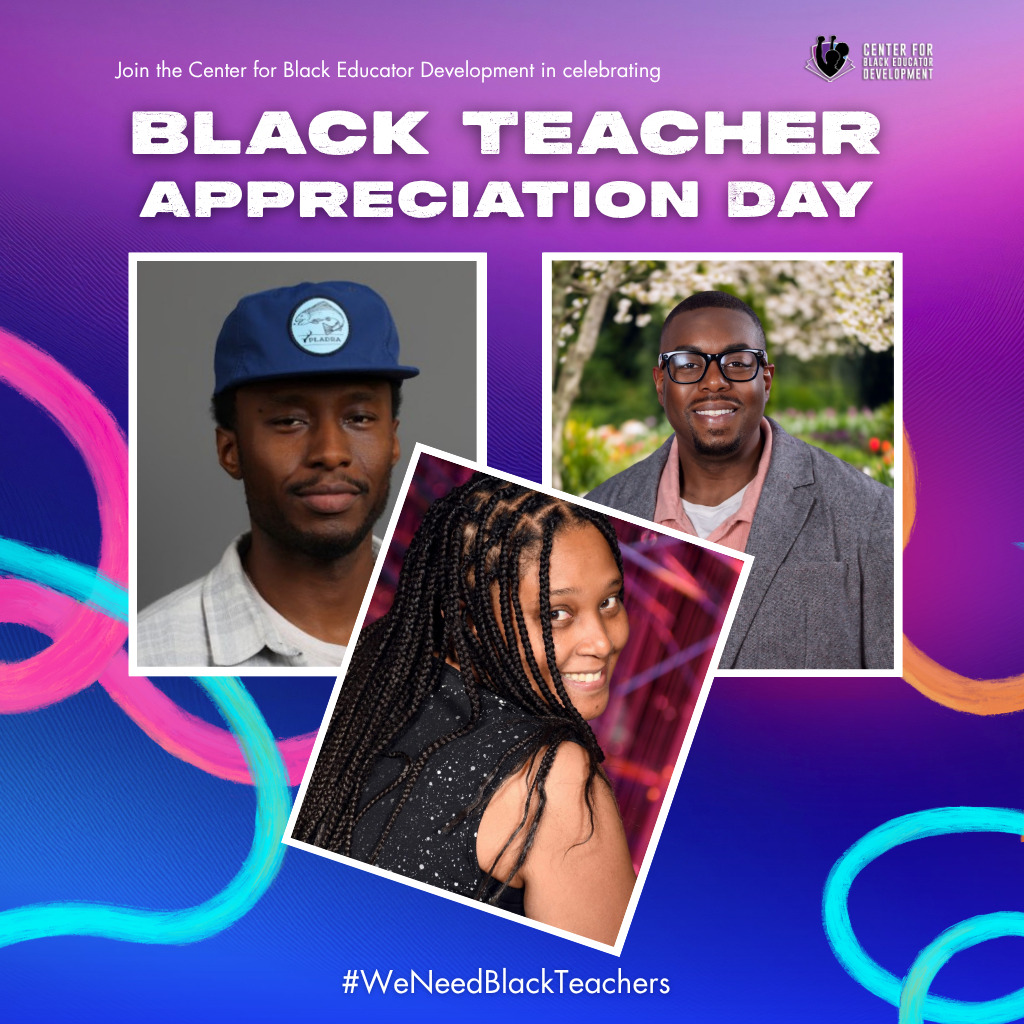
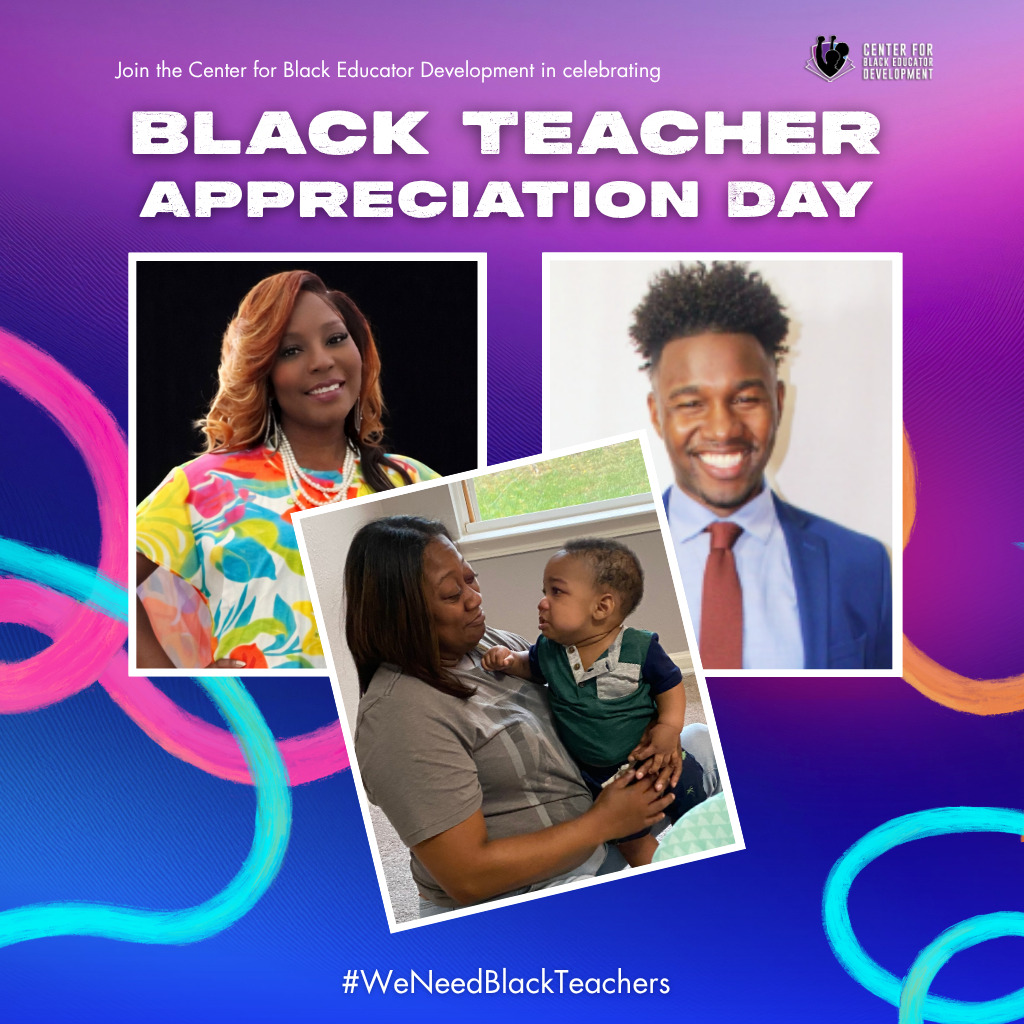
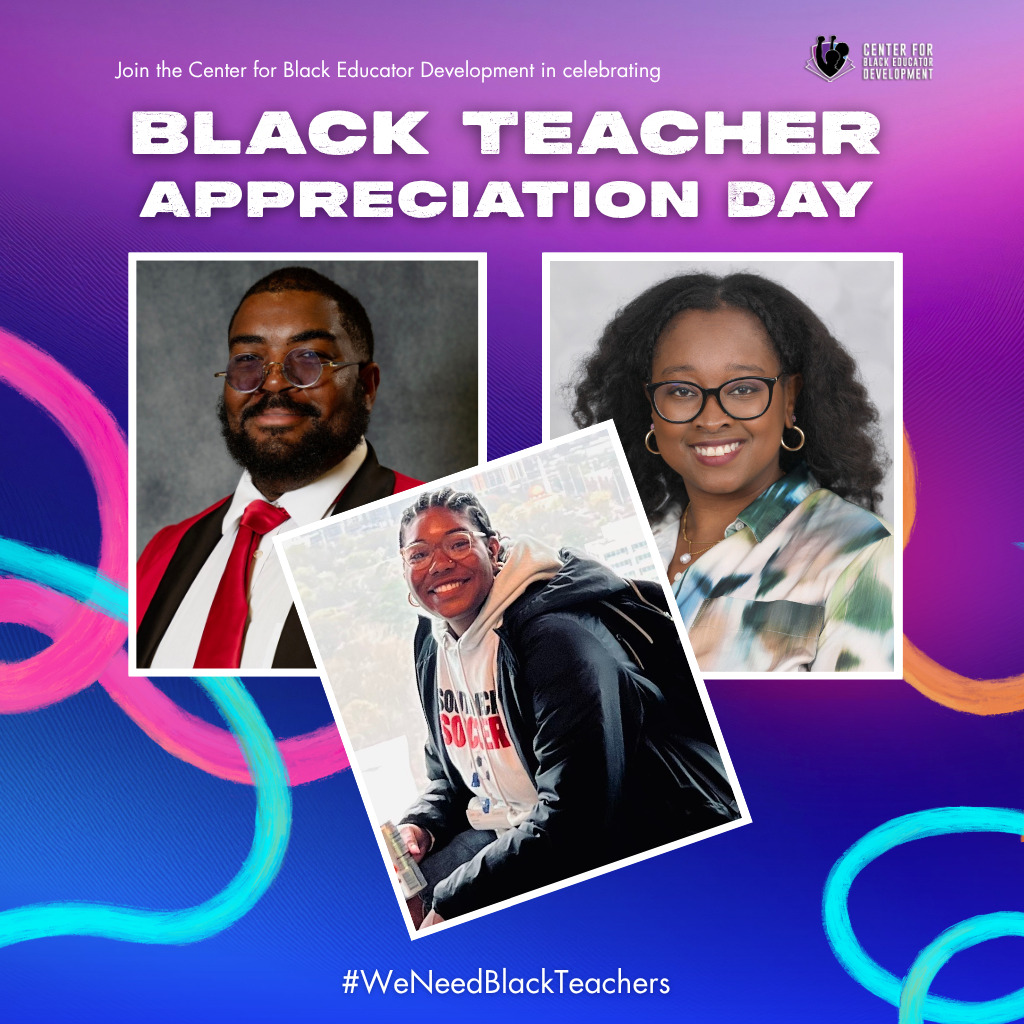
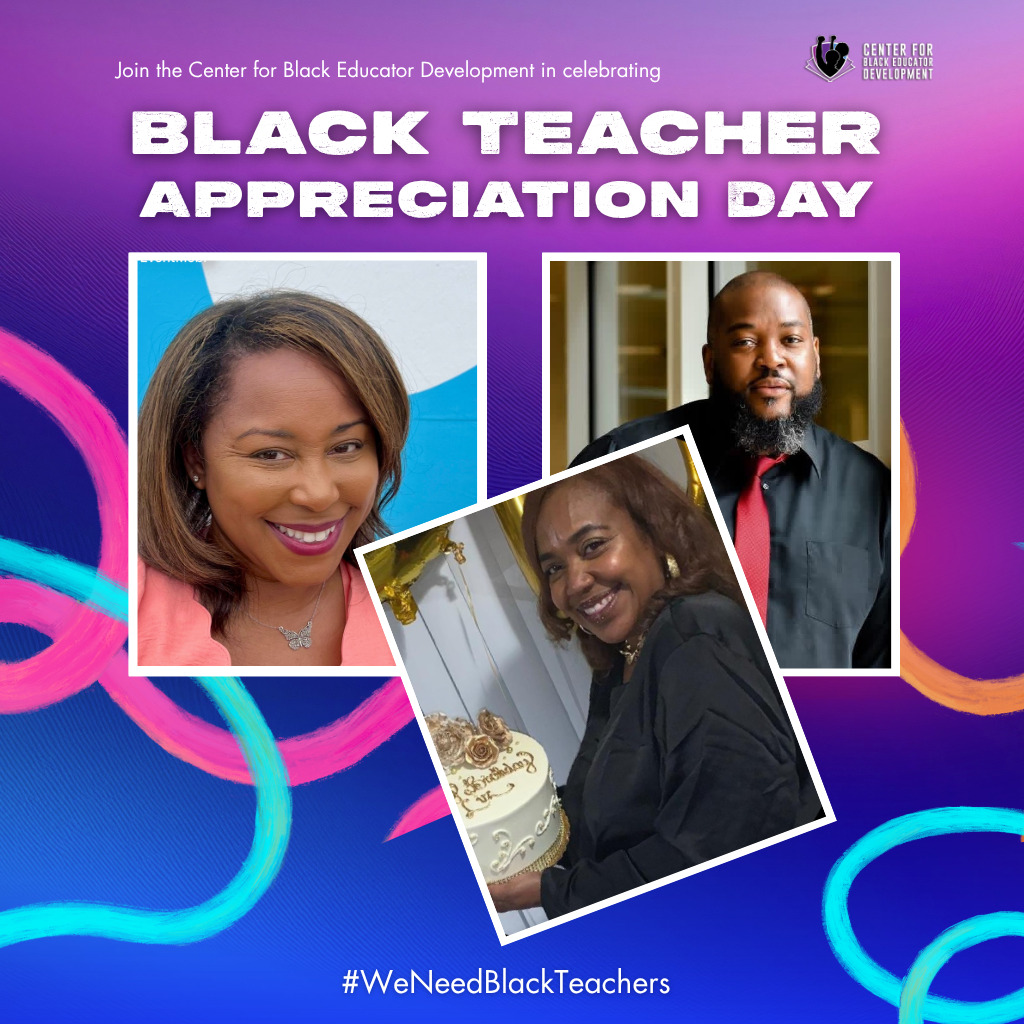
2026 Black Teacher Appreciation Day Reaffirms Teaching as a Practice of Freedom
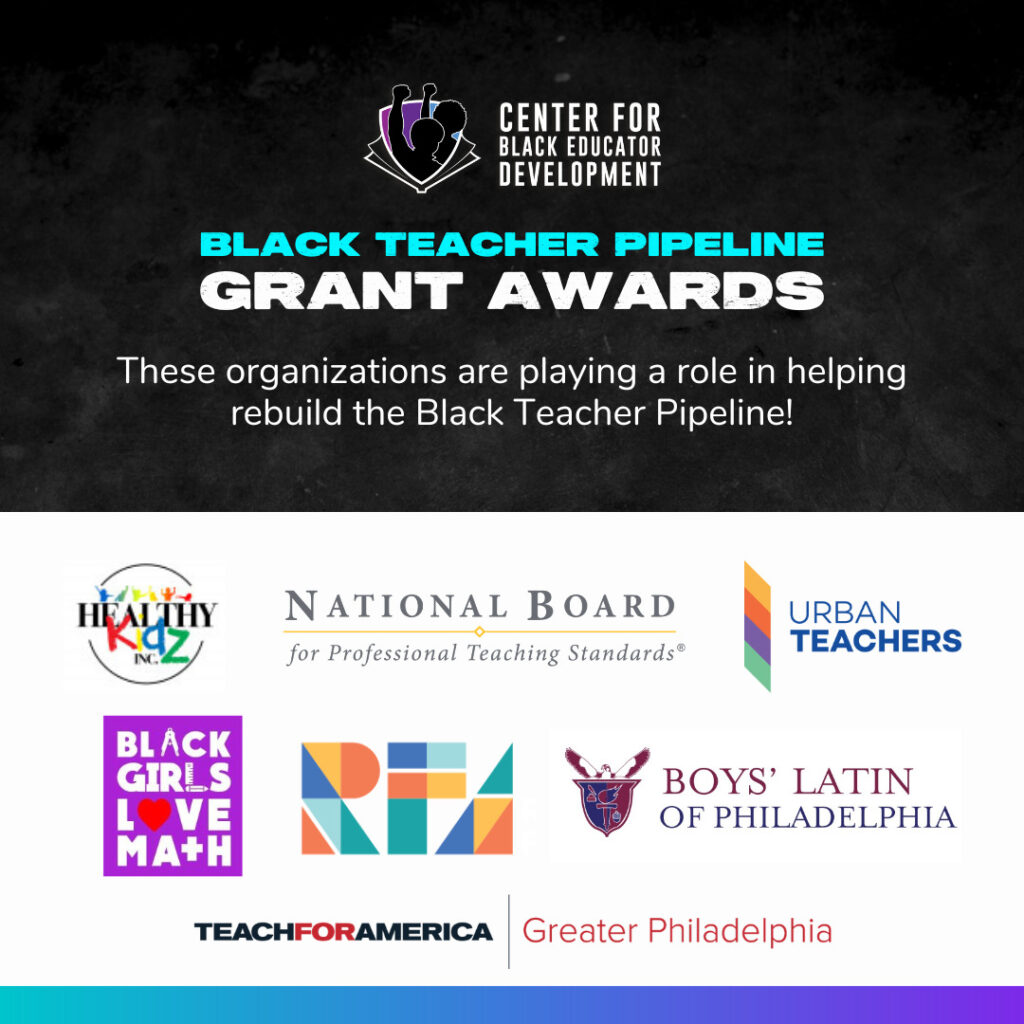
National moment coined by the Center for Black Educator Development celebrates the impact of Black educators with a $100,00 grant announcement and special giveaways
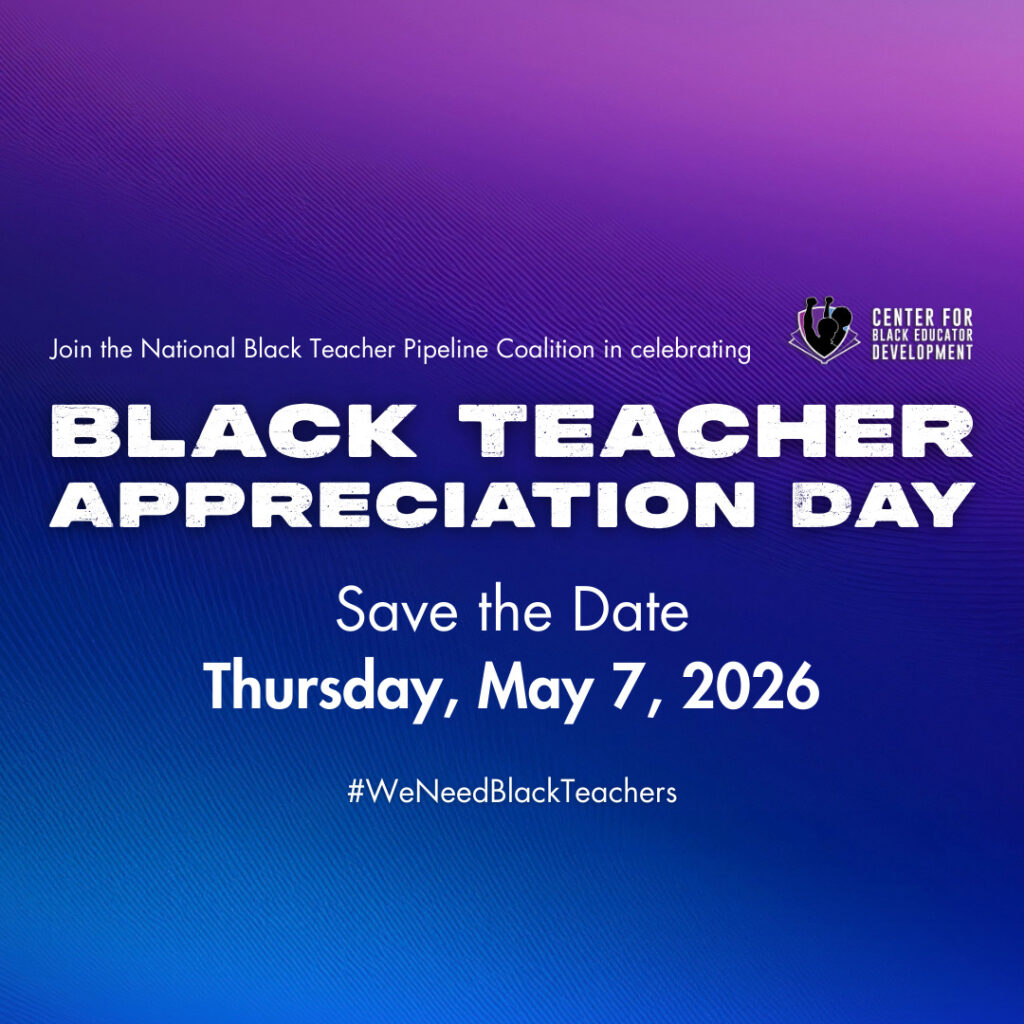
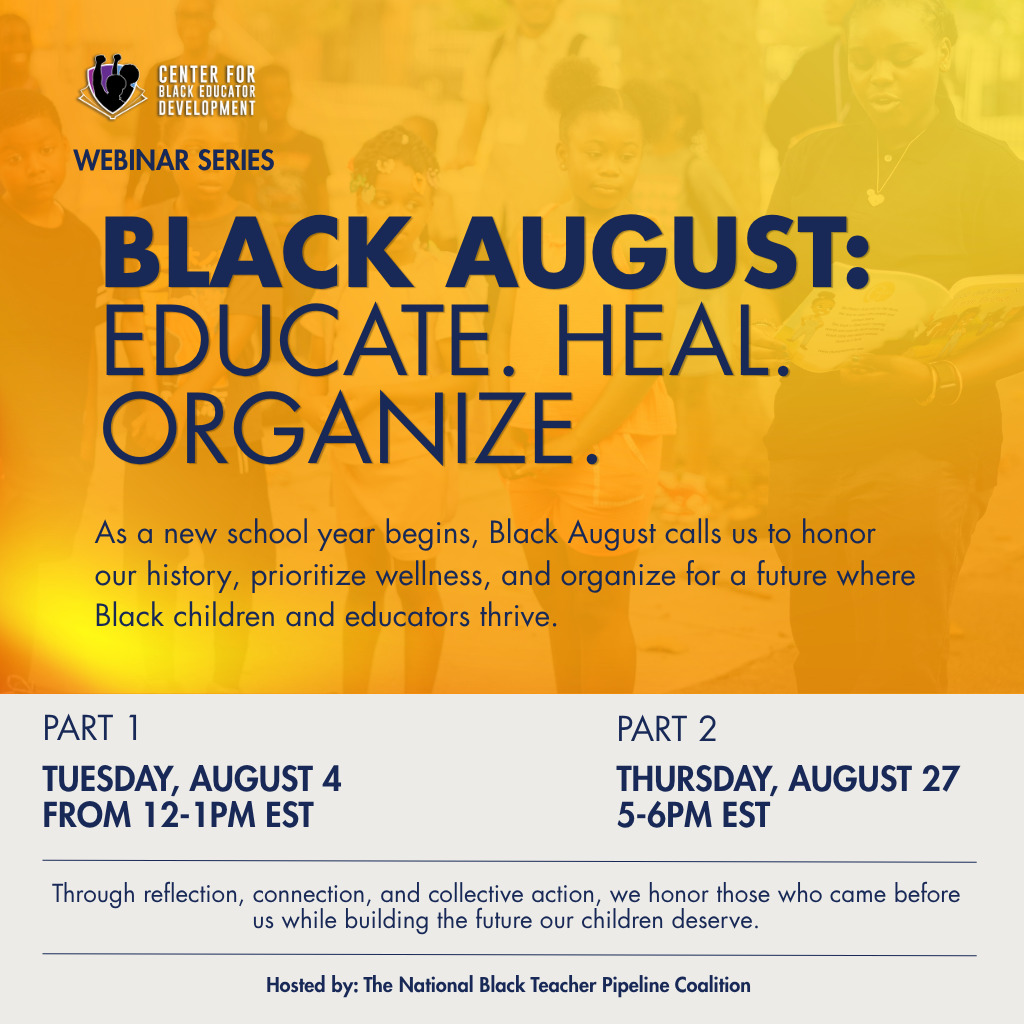
PHILADELPHIA, PA — On May 7, 2026, the Center for Black Educator Development (CBED), in collaboration with the National Black Teacher Pipeline Coalition – comprising UNCF, Black Teacher Collaborative, Black Teacher Project, Real Men Teach, Education PowerED, Healing Schools Project — will recognize Black Teacher Appreciation Day 2026.
This year's celebration comes at a historic moment. As the nation marks the 100th anniversary of Black History Month, the coalition is centering Carter G. Woodson's founding vision — that education is inseparable from freedom.
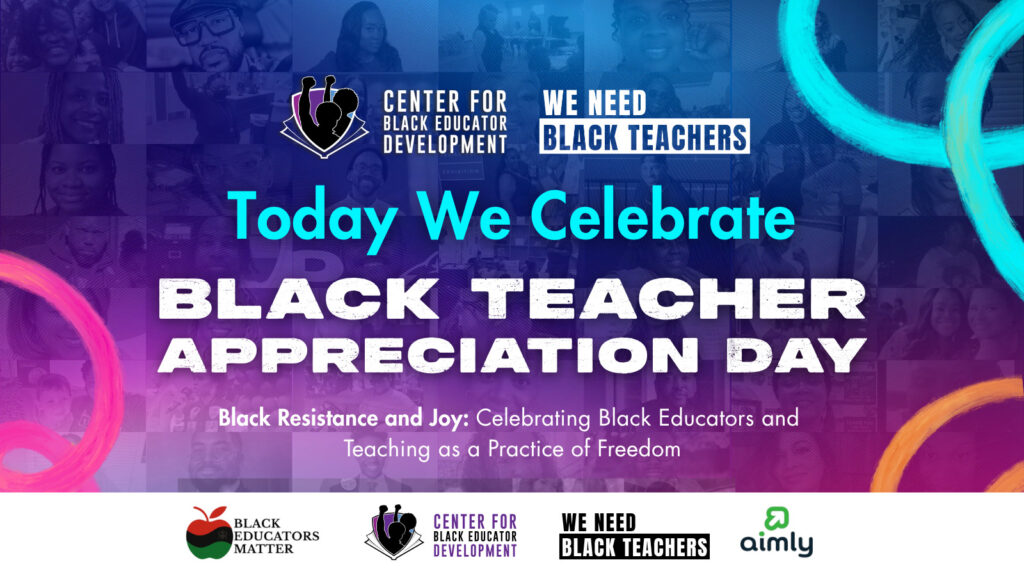
For this year’s celebration, CBED is partnering with Black Educators Matter and Aimly to provide special giveaways and support for Black teachers.
“As we mark the 100th anniversary of Black History Month, we must also honor the legacy of Carter G. Woodson and every Black educator who has carried forward that tradition of teaching as freedom,” said Micia Mosely, Ph.D., Founder and Executive Director of the Black Teacher Project. “Black educators don't just teach — they lead the reimagination of education by promoting belonging and creating more inclusive and supportive learning environments.”
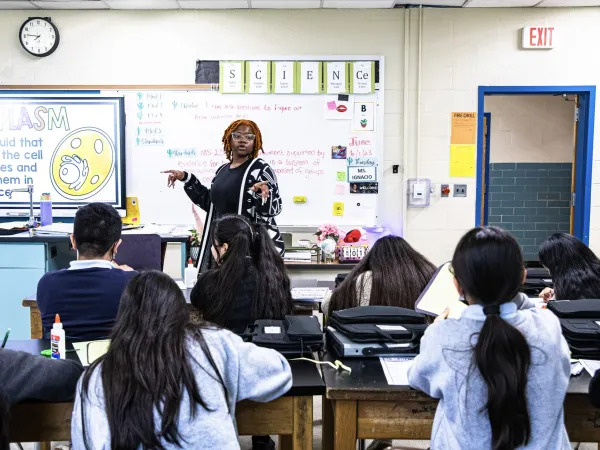
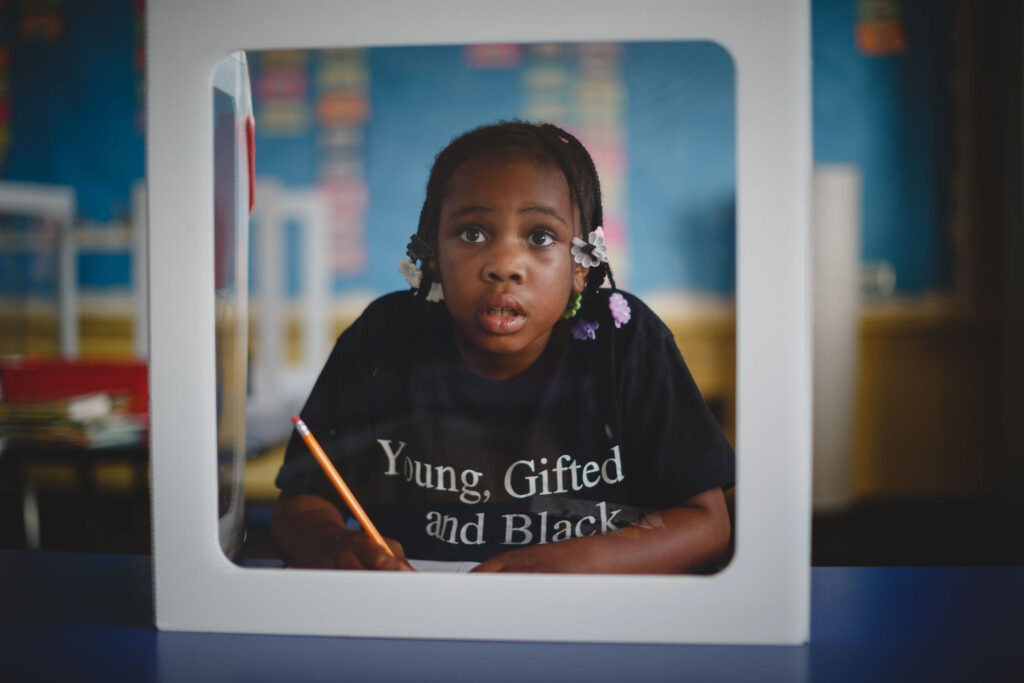
Black students who have had at least one Black teacher are 38% more likely to feel they belong at school. Yet Black educators remain critically underrepresented in classrooms across the country.
"Black teachers deserve rest, joy and connection, and it is our privilege to bring that into our schools,” said Dr. Wenimo Okoya, Founder and Executive Director of Healing Schools Project.
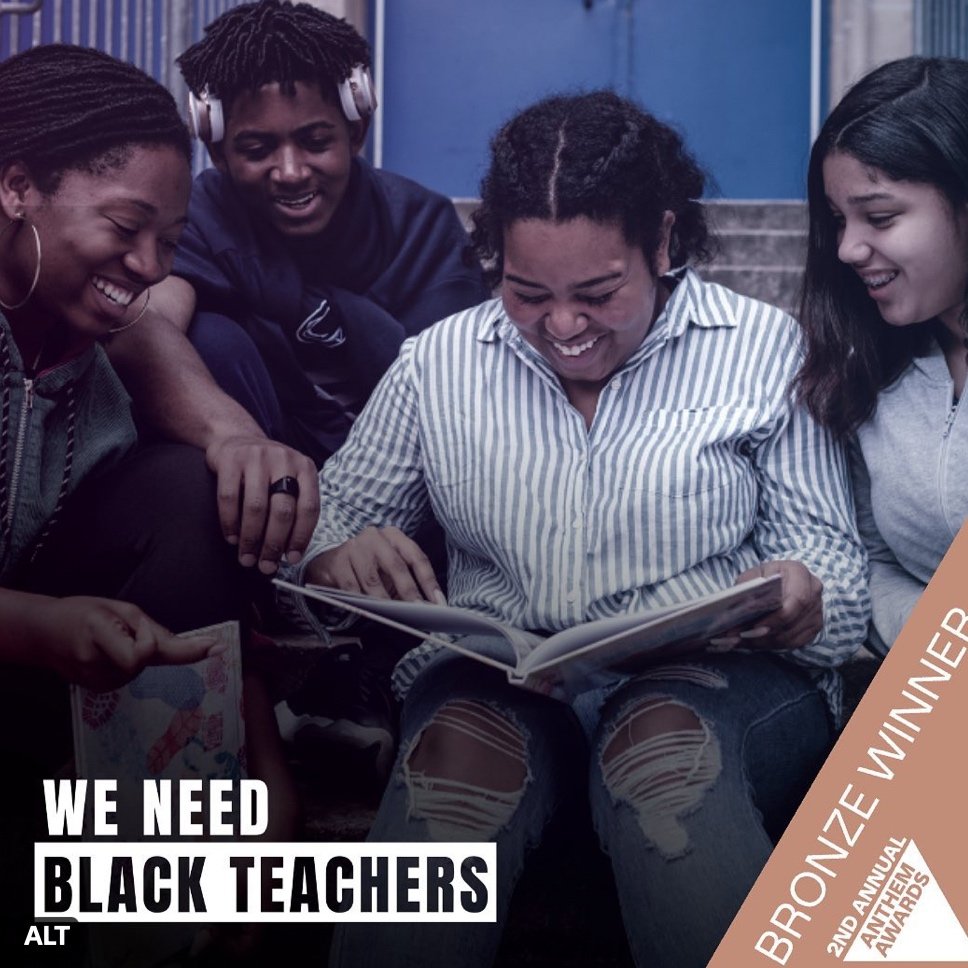
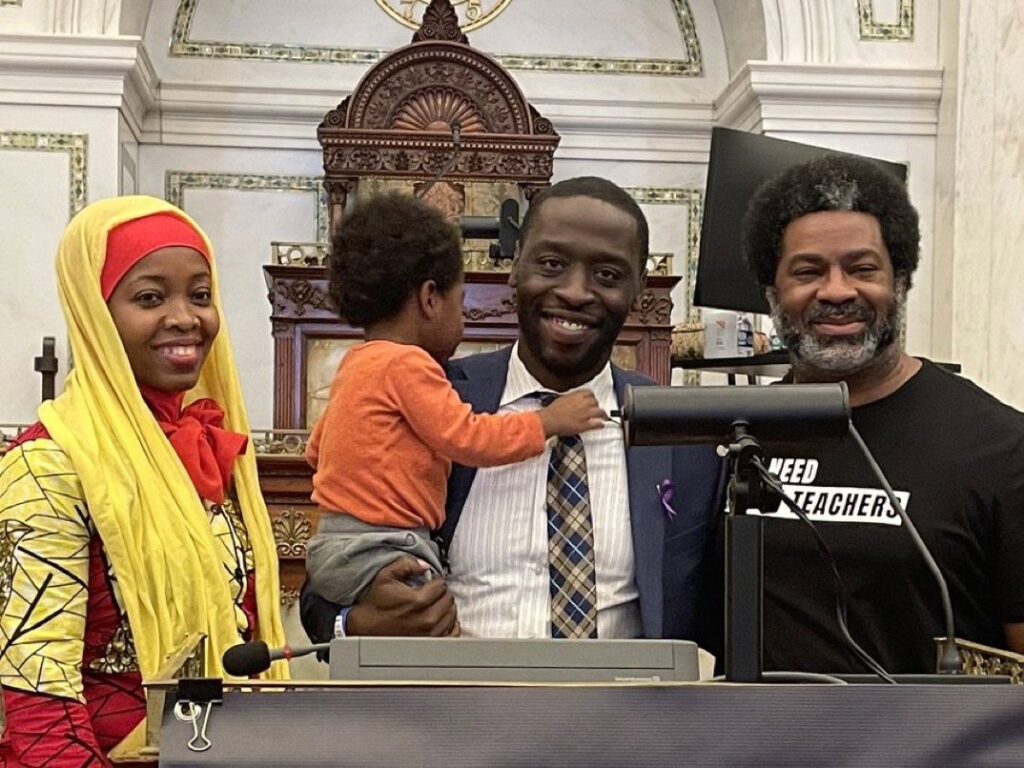
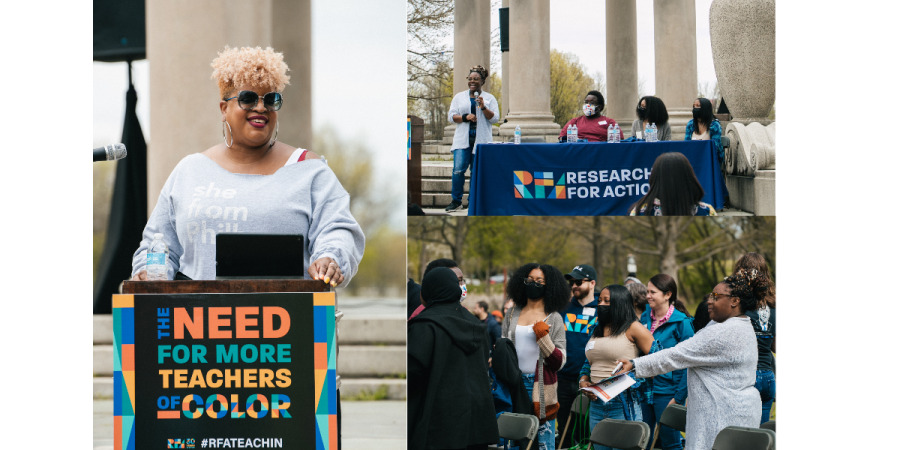
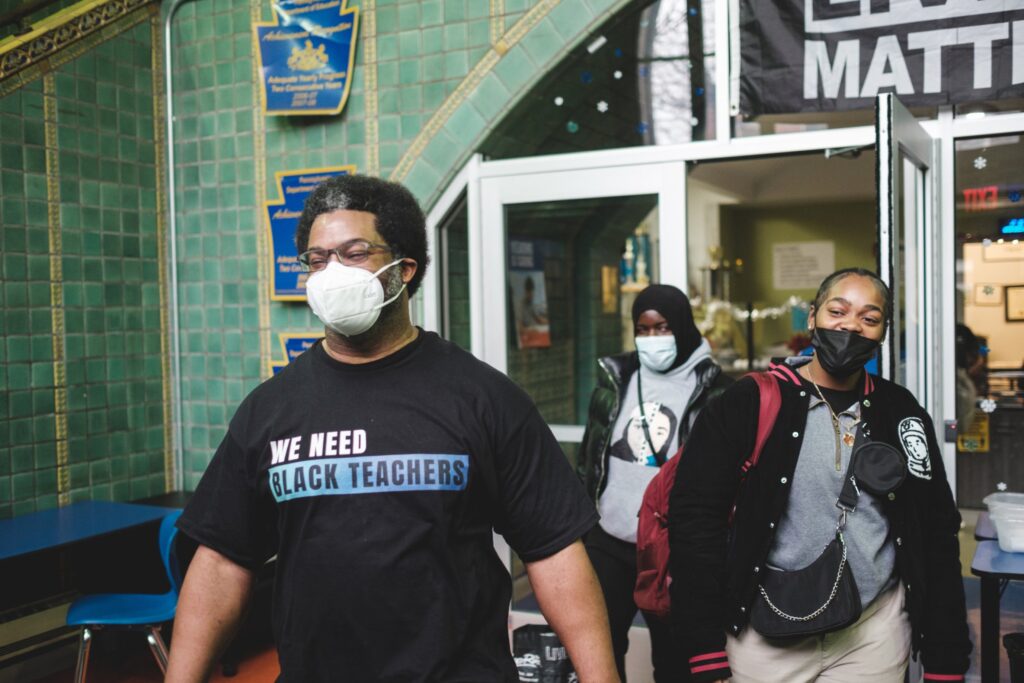
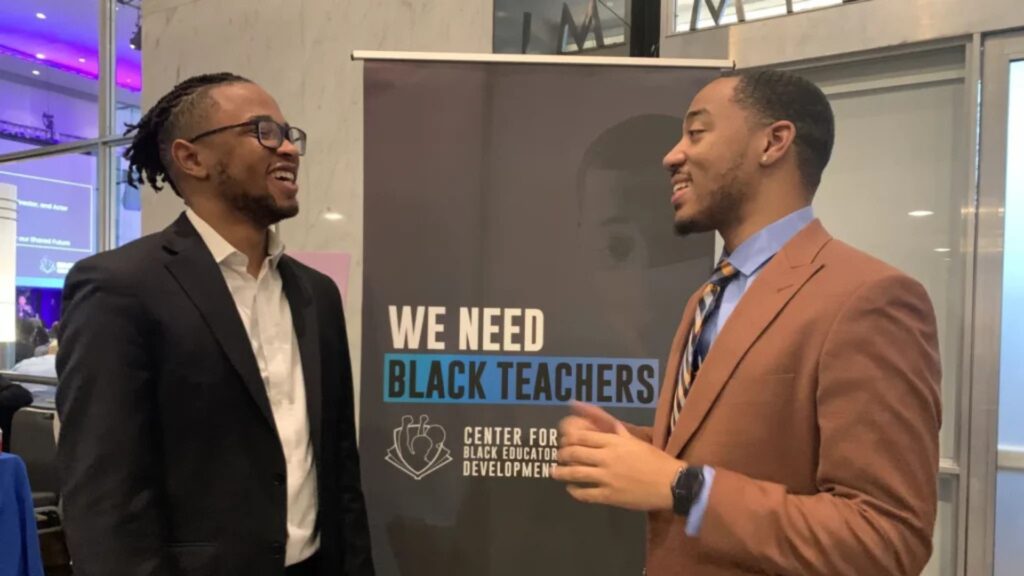
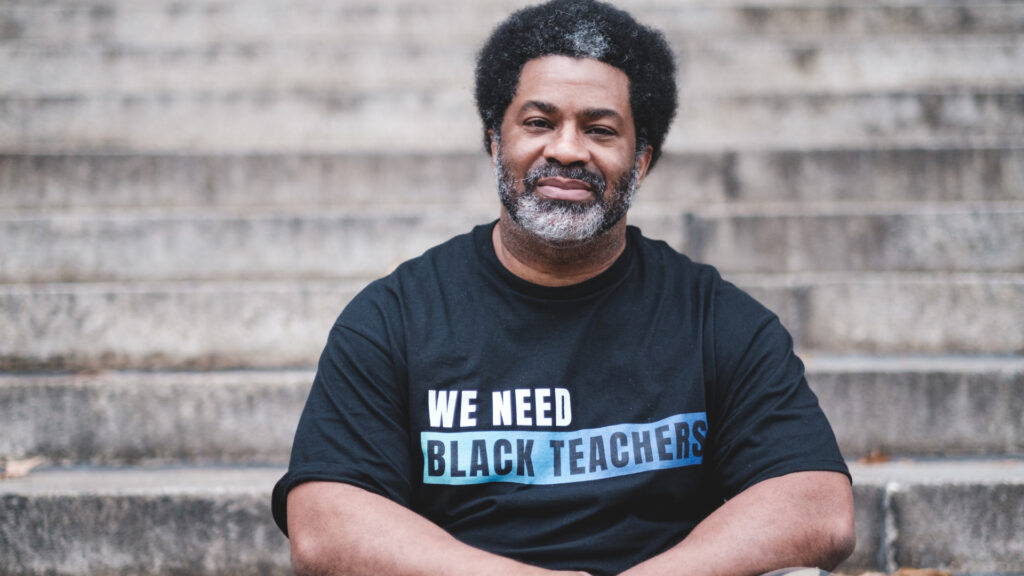
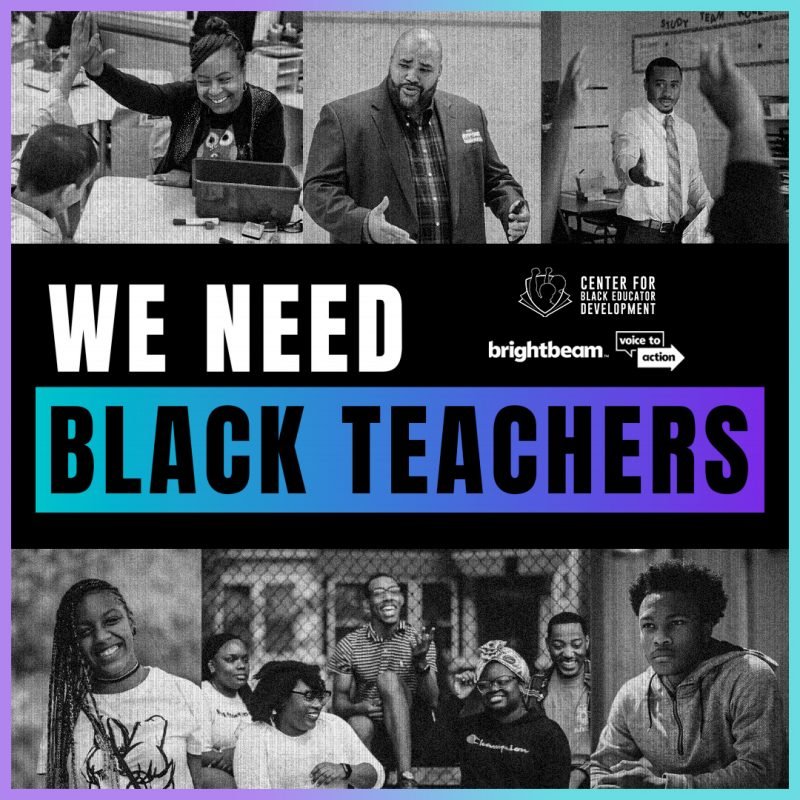
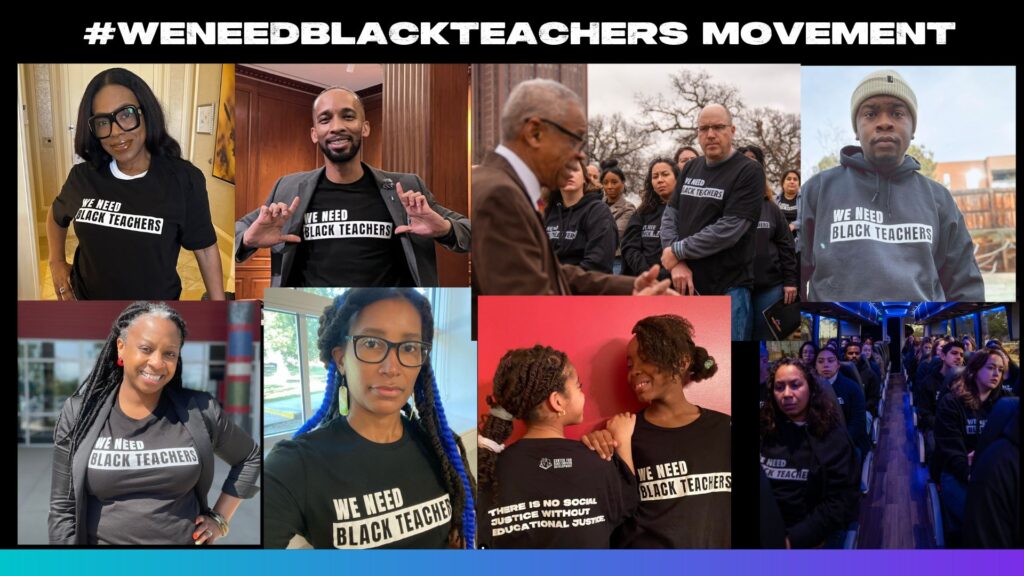
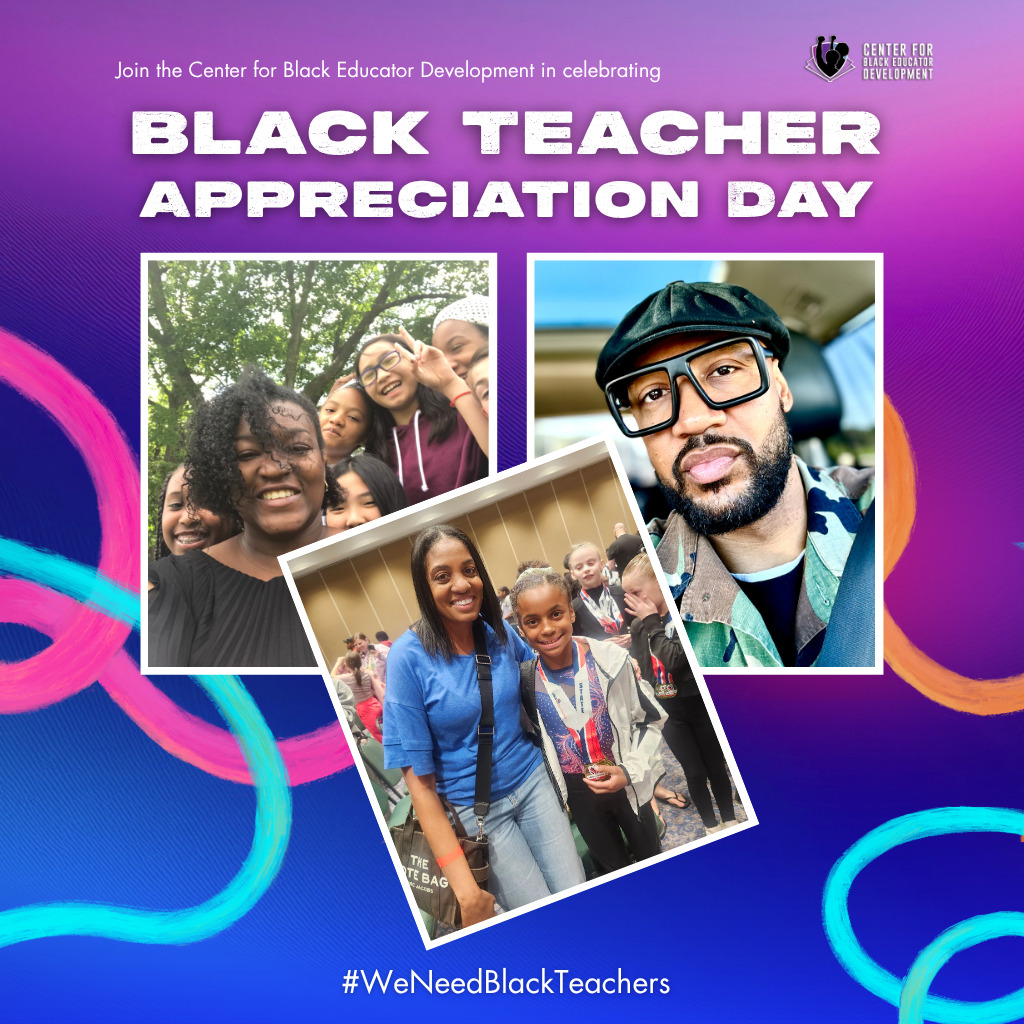
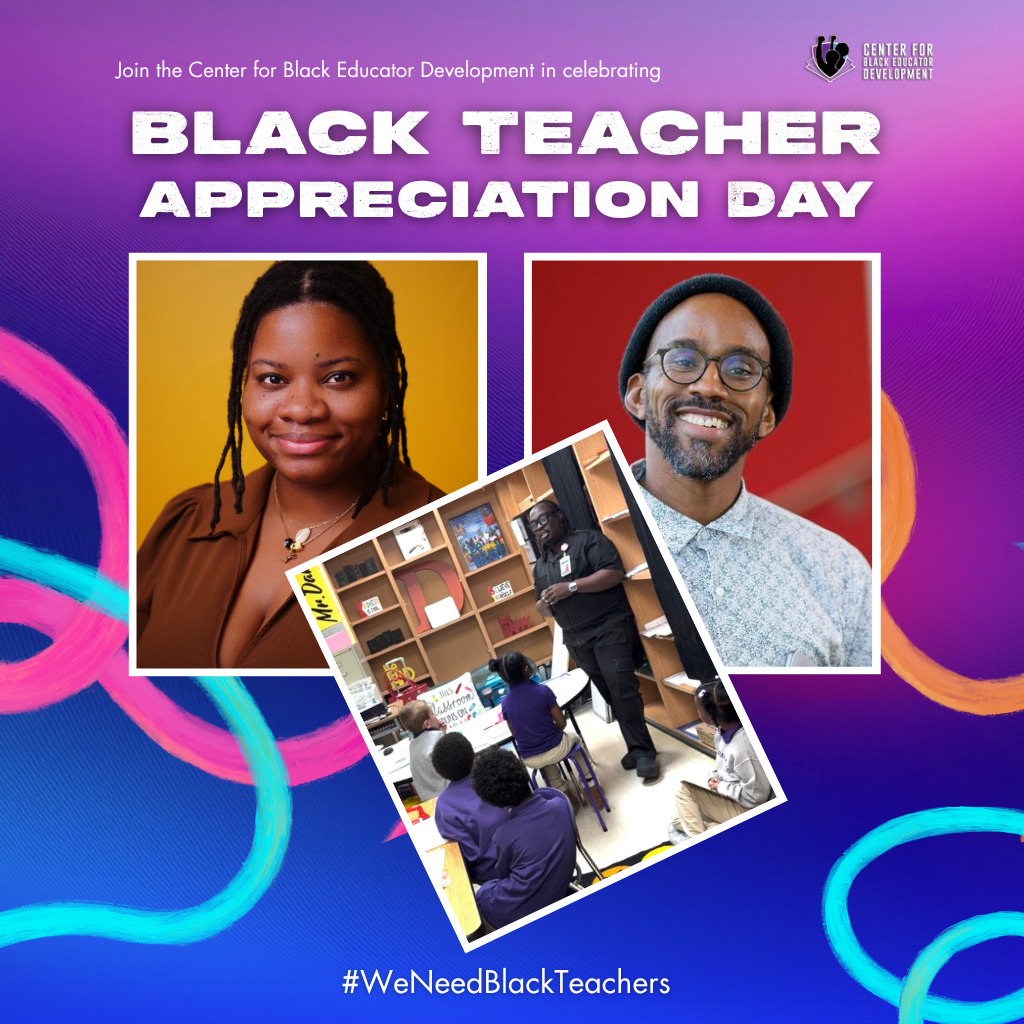
Black Teacher Appreciation Day is a centerpiece of the national #WeNeedBlackTeachers campaign, which recognizes Black educators as mentors, leaders and culture bearers — and calls on institutions to back that recognition with real investment. With this year’s theme, “Black Resistance and Joy,” and in this 100th anniversary year of Black History Month, the coalition honors Carter G. Woodson's vision and every educator who teaches as an act of liberation and love.
“Teacher Appreciation Week and Black Teacher Appreciation Day are about more than celebrating the impact of Black educators — they are about taking action to secure the future of the profession,” said Sharif El-Mekki, Founder and CEO of CBED. “Through the We Need Black Teachers campaign, we are elevating the urgent need for real investment in Black educators, not just recognition. Diversifying and sustaining the teaching workforce is a proven strategy that makes schools stronger and improves outcomes for every student.”
CBED and the National Black Teacher Pipeline Coalition will host virtual and local events nationwide. For details and registration, visit https://thecenterblacked.org/we-need-black-teachers.
About #WeNeedBlackTeachers
Launched in 2021, #WeNeedBlackTeachers is a national advocacy campaign led by the Center for Black Educator Development (CBED) that seeks to drive action in support of CBED’s mission to rebuild the Black national teacher pipeline. Data proves that an increase of Black teachers in U.S. classrooms not only improves academic outcomes for Black students, but also fosters a more effective and quality education system for all students. The #WeNeedBlackTeachers campaign seeks to inspire young Black students to become teachers, while highlighting the profound impact that Black educators have on our lives. To learn more or get involved, visit https://thecenterblacked.org/we-need-black-teachers/.
About The Center for Black Educator Development
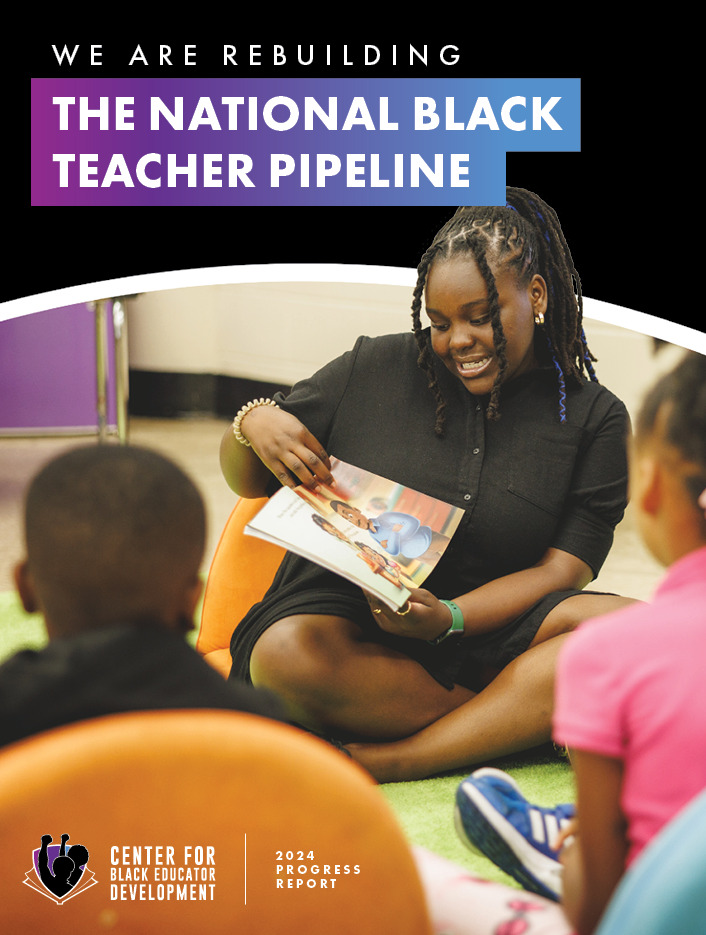
The Center for Black Educator Development was founded in 2019 to address and accelerate change in the educational ecosystem. Its mission to rebuild the national Black Teacher Pipeline to achieve educational equity and racial justice is achieved through the alignment of pathways into the profession, professional learning and public policies to ensure greater educator diversity, cultural responsiveness and improved student outcomes for Black children.