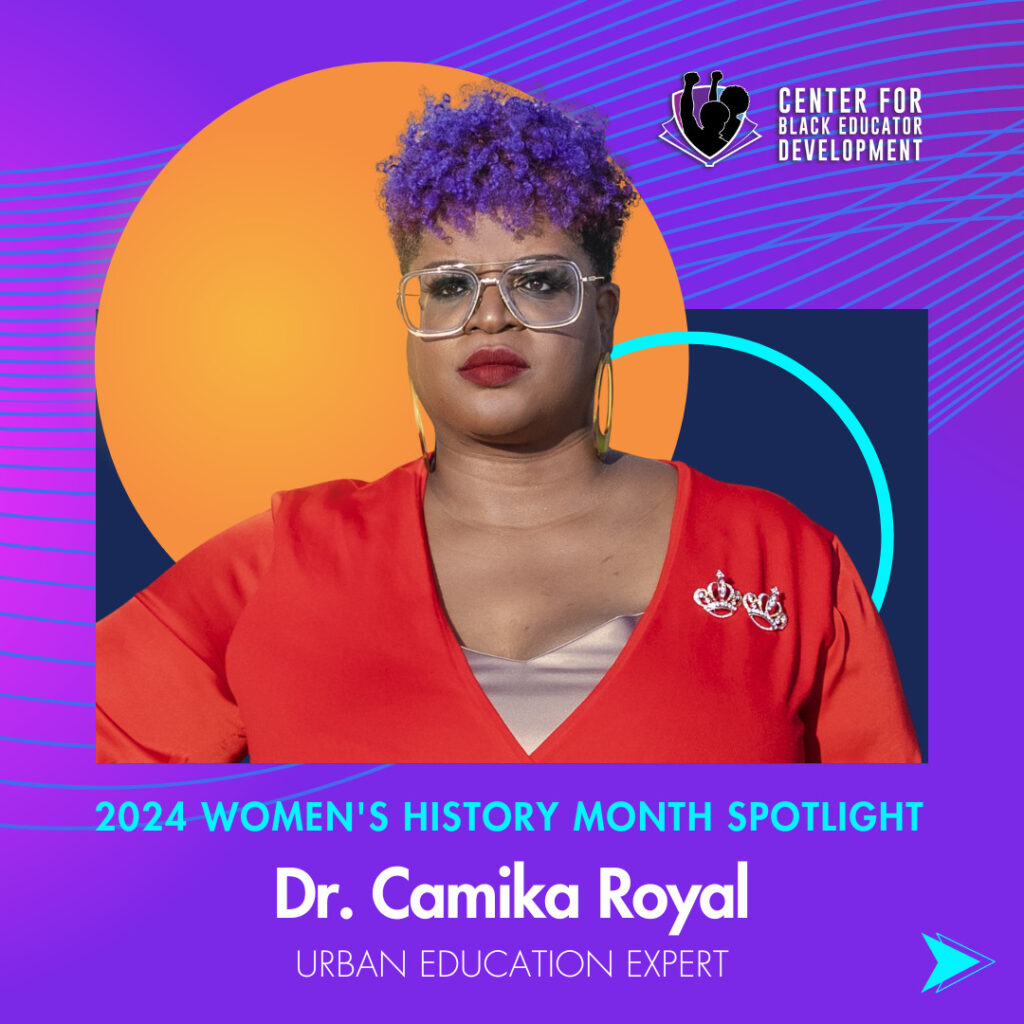
Women’s History Month Spotlight: Dr. Dorinda Carter-Andrews
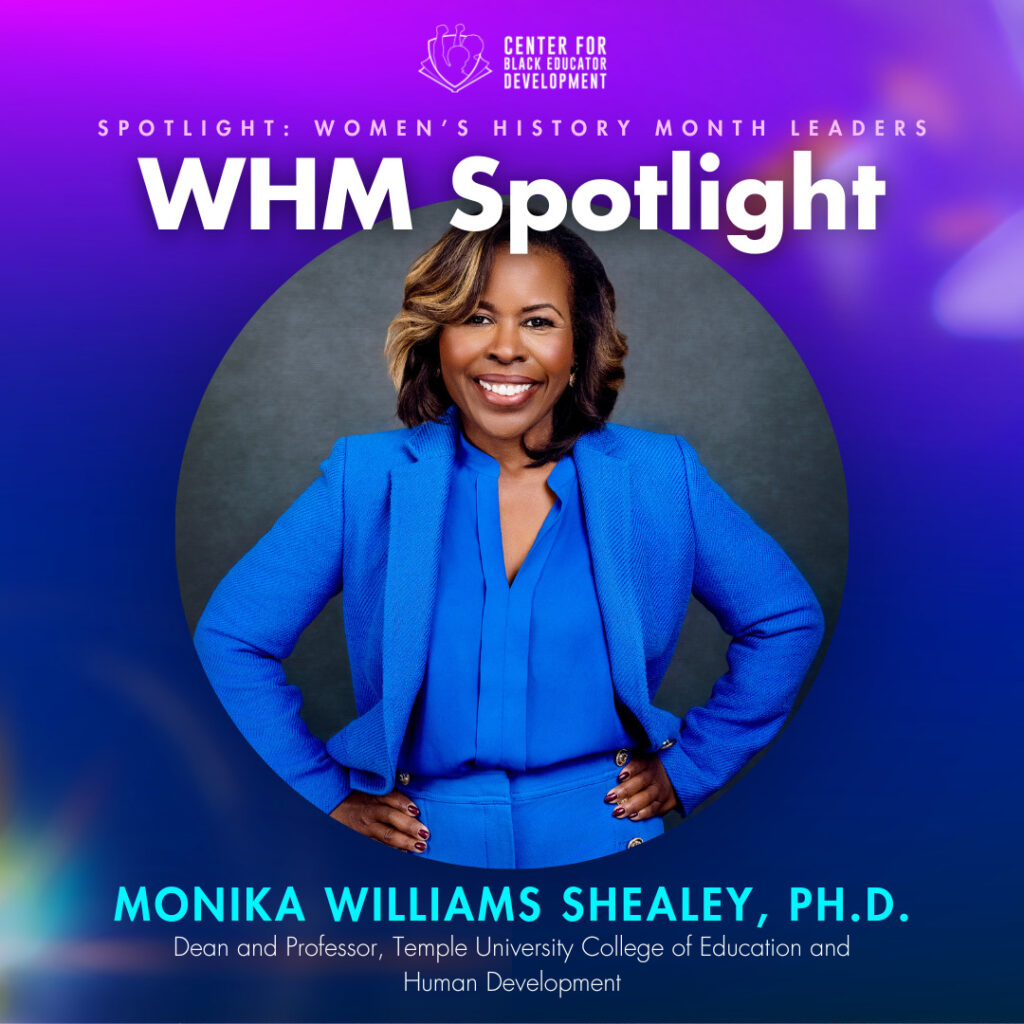
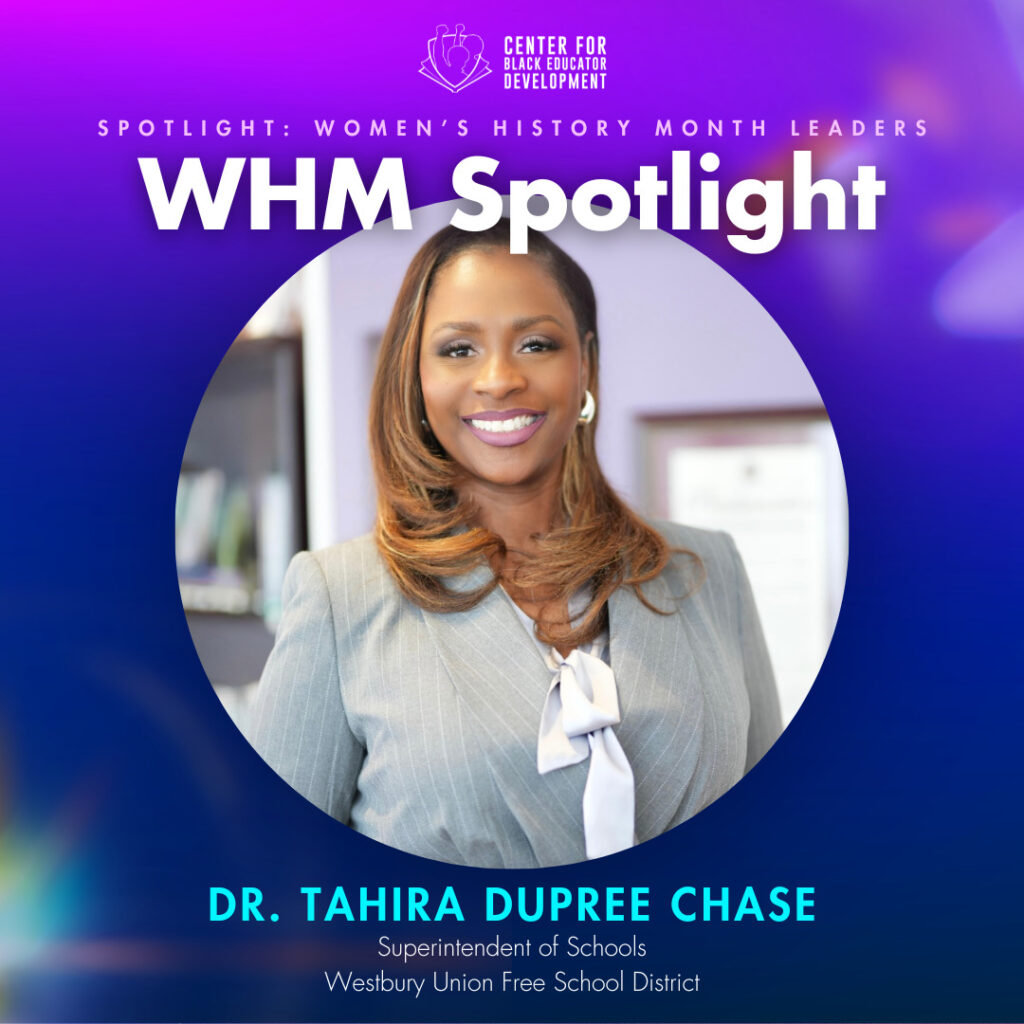
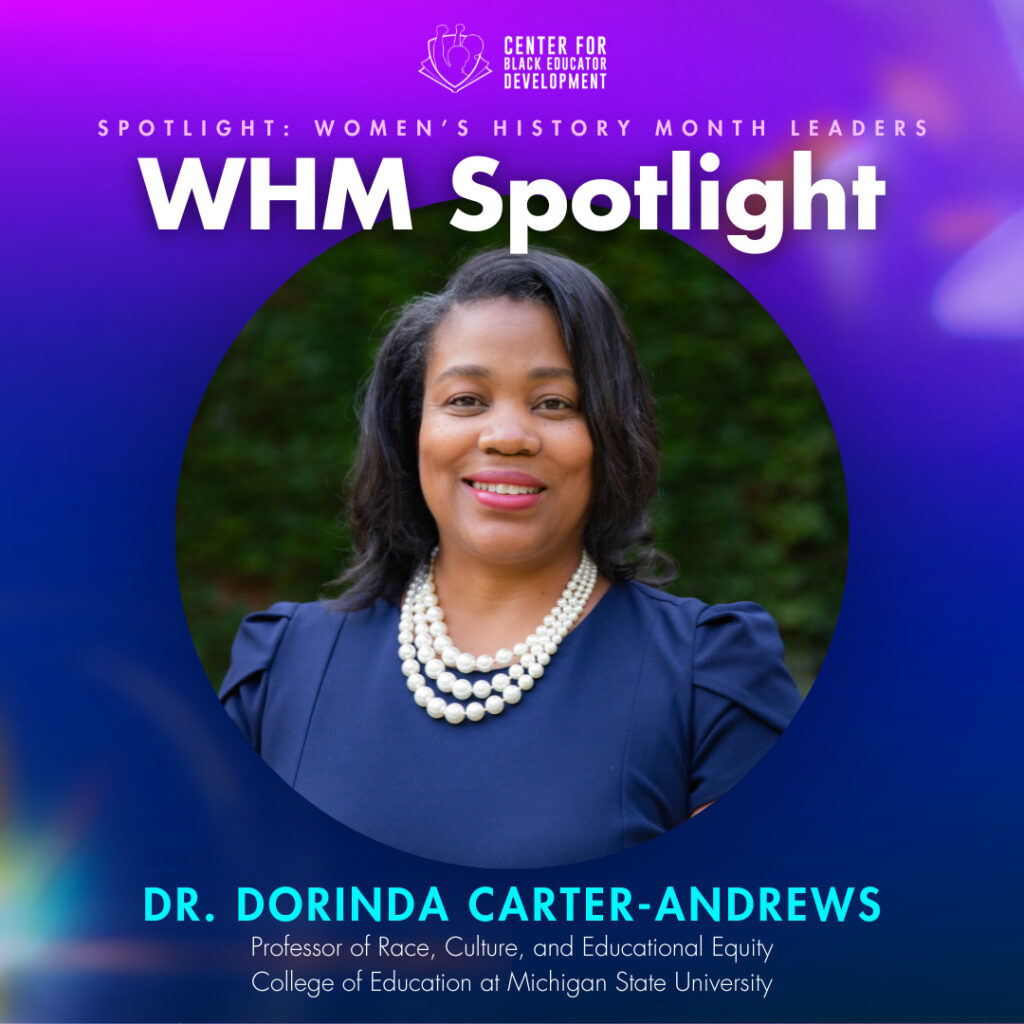
We took a moment to ask educational leaders some questions during Women's History Month. Our next spotlight is on Dr. Dorinda Carter-Andrews, Professor of Race, Culture, and Educational Equity at Michigan State University's College of Education and a board member of the Center for Black Educator Development.
What does it mean to you to lead as a Black woman in education at this moment in history?
For me, leading in education as a Black woman in this particular moment in history means carrying memory, responsibility, and dreaming all at once. The principles of phenomenal Black educators such as Septima Clarke, Mary MacLeod Bethune, and Anna Julia Cooper guide me in my everyday work on behalf of Black educators, students, and families. I try to lead with historical consciousness, while attending to racial equity and justice in education, and continue working collaboratively with researchers, practitioners, students, and community members to not only dream but actualize the kinds of liberatory educational spaces that serve Black students well and, hence, all students well.
Where do you see the greatest opportunity to grow and sustain the Black teacher pipeline?
I think we have to consider that there's not one single intervention that can grow and sustain the Black teacher pipeline. Growth and sustainment sit at the intersection of early cultivation into the profession, structural redesign of preparation programs, and long-term retention strategies. Research indicates that when students are part of teaching interest programs that are intentional and identity-affirming as early as middle and high school, they are significantly more likely to persist in the profession. These programs often offer mentorship from Black educators, paid early-field experiences, and dual-enrollment coursework. Additionally, urban teacher residency models -- as a structural redesign -- help reduce attrition and increase placement stability. Further, centering culturally sustaining teacher preparation can aid pipeline growth. Lastly, because the pipeline leaks the most within the first five years in the profession, there has to be a systematic focus on improving teacher working conditions.